| ID | Decision | Category | Figure | Original | Edited | Reasoning |
|---|---|---|---|---|---|---|
| 01K0RMVPPMBBMTS2FAQ5S1AY5R | Localize | Units (convert) | Original 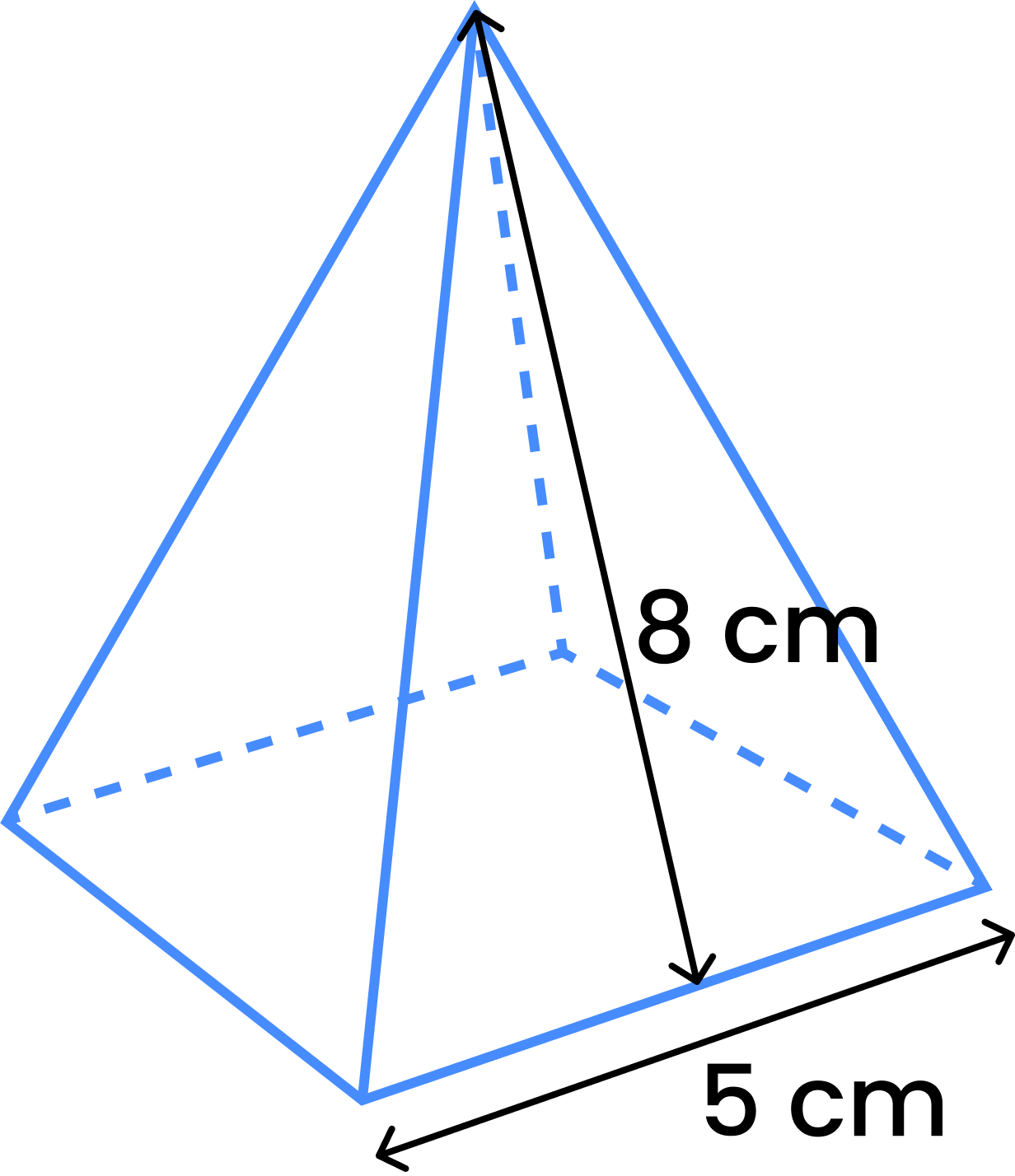 Edited  |
Find the total surface area of a square pyramid with a base side length of $5$ m and a slant height of $8$ m.
|
Find the total surface area of a square pyramid with a base side length of $16$ ft and a slant height of $26$ ft.
|
Rationale: The question contains metric units (m and m^2) in the content, suffix, and image labels. These must be converted to US customary units (feet and ft^2). The image also shows labels "8 cm" and "5 cm" which require conversion to inches. Image edit: Only change '8 cm' to '3 in' in the slant height label on the pyramid diagram, keep everything else the same | Only change '5 cm' to '2 in' in the base side length label on the pyramid diagram, keep everything else the same
|
| 01K0RMVPQDHSRC4EDVJRPT8G13 | Localize | Units (convert) | Original 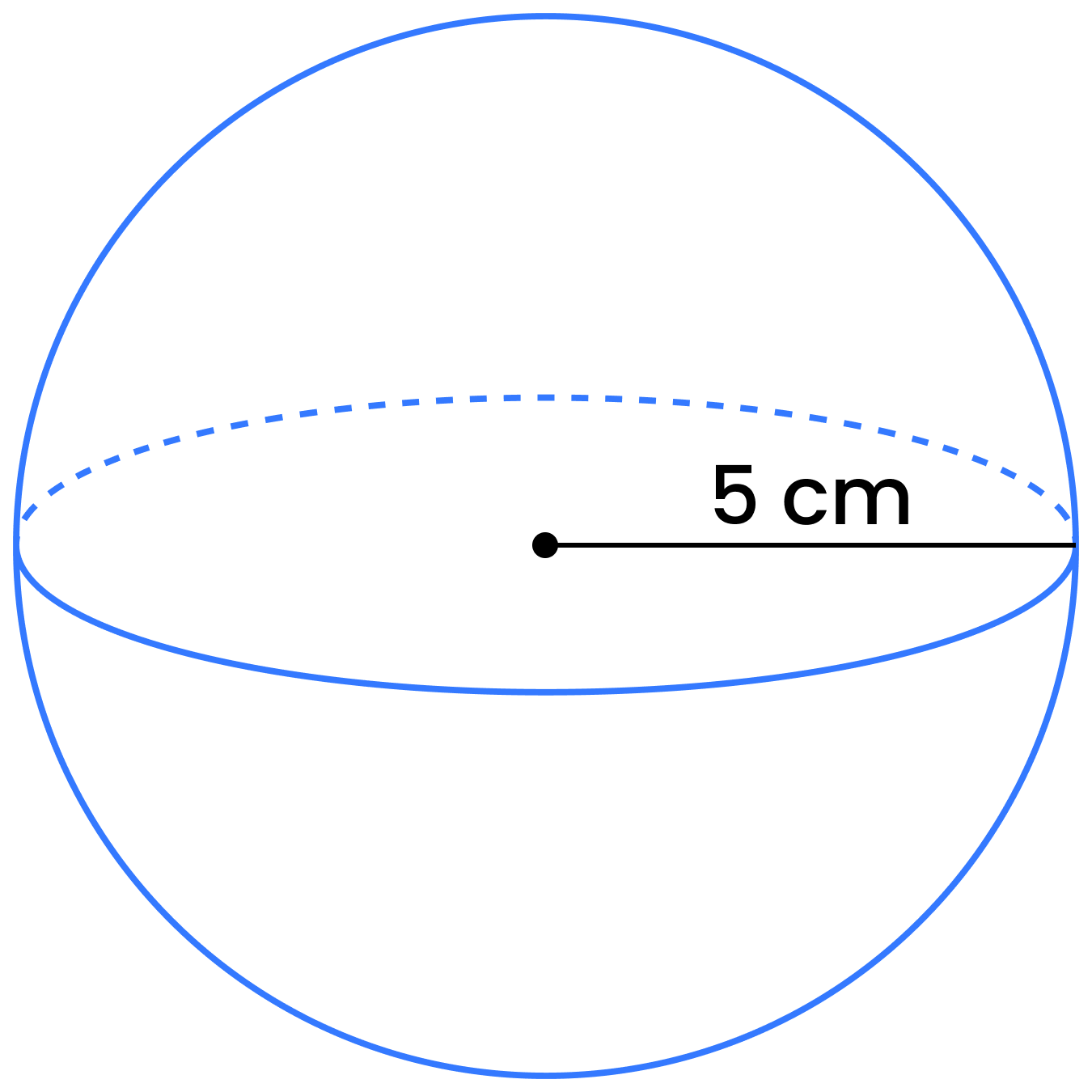 Edited  |
Find the surface area of a sphere with a radius of $5$ cm in terms of $\pi$.
|
Find the surface area of a sphere with a radius of $2$ in in terms of $\pi$.
|
Rationale: The question contains metric units (cm, cm²) in the content field, suffix field, and image label. These must be converted to US customary units (inches, in²). The radius of 5 cm converts to approximately 2 inches (5 × 0.394 = 1.97 ≈ 2 in), giving a clean round number. Surface area formula SA = 4πr² with r = 2 in gives 4π(4) = 16π in². Image edit: Only change '5 cm' to '2 in' in the radius label annotation on the right side of the sphere, keep everything else the same.
|
| 01K0RMVPR4SKX4R1C91NFZQ3AH | Localize | RED.units_complex_converted | Original 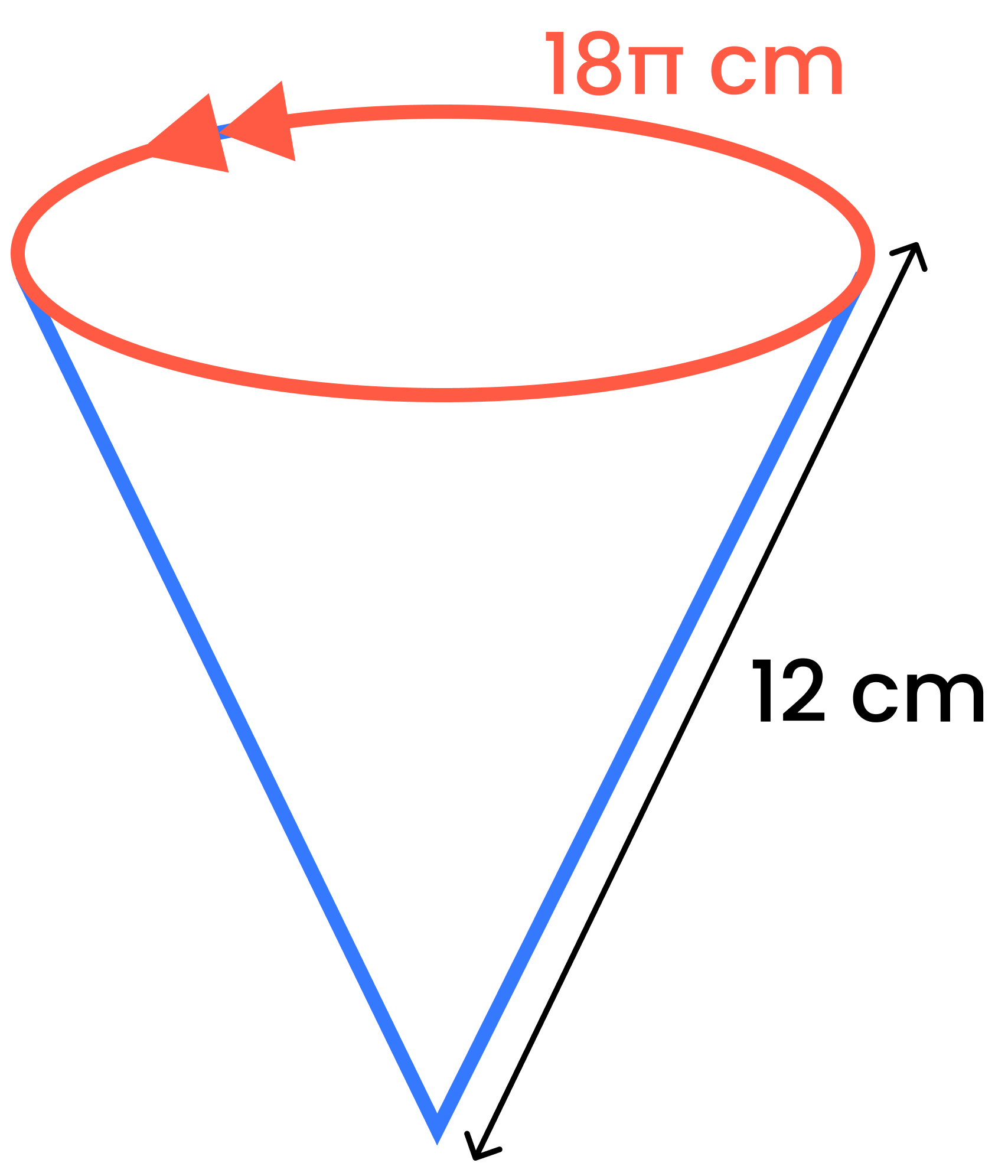 Edited  |
The circumference of the base of a cone is $18\pi$ cm.
Its slant height is $12$ cm.
Find the total surface area of the cone in exact form.
|
The circumference of the base of a cone is $18\pi$ in.
Its slant height is $4.72$ in.
Find the total surface area of the cone in exact form.
|
Rationale: The question contains metric units (cm) in the text, suffix, and image labels. The question asks for an exact-form answer involving π, which means the numeric values are derived from the circumference (18π cm) and slant height (12 cm). Converting cm to inches requires adjusting all numeric values: circumference 18π cm → radius 9 cm → 9 × 0.394 ≈ 3.543 in, slant height 12 cm → 12 × 0.394 ≈ 4.724 in. These do not yield clean round numbers, and the exact-form answer 189π must be recalculated. Because the answer is derived from interdependent values and the conversion does not yield clean pedagogical numbers, this is flagged as RED.units_complex_converted for human review. Conversion: radius = 9 cm → ~3.54 in, slant height = 12 cm → ~4.72 in. Total surface area = πr² + πrl = π(9²) + π(9)(12) = 81π + 108π = 189π cm². In inches: π(3.54²) + π(3.54)(4.72) = π(12.53) + π(16.71) = π(29.24) ≈ 29.24π in². To keep cleaner numbers, using exact conversion factor 0.3937: r = 9 × 0.3937 = 3.5433 in, l = 12 × 0.3937 = 4.7244 in. TSA = π(3.5433)² + π(3.5433)(4.7244) = π(12.555) + π(16.740) = 29.295π in². Rounded to clean form: approximately 29.3π in². Flagged for human review due to non-clean numbers. Image edit: Only change '18π cm' to '18π in' in the circumference label at the top of the cone, keep everything else the same | Only change '12 cm' to '4.72 in' in the slant height label on the right side of the cone, keep everything else the same
|
| 01K0RMVPR8YJEWXTSVH5MBT64Z | Localize | Units (convert) | Original 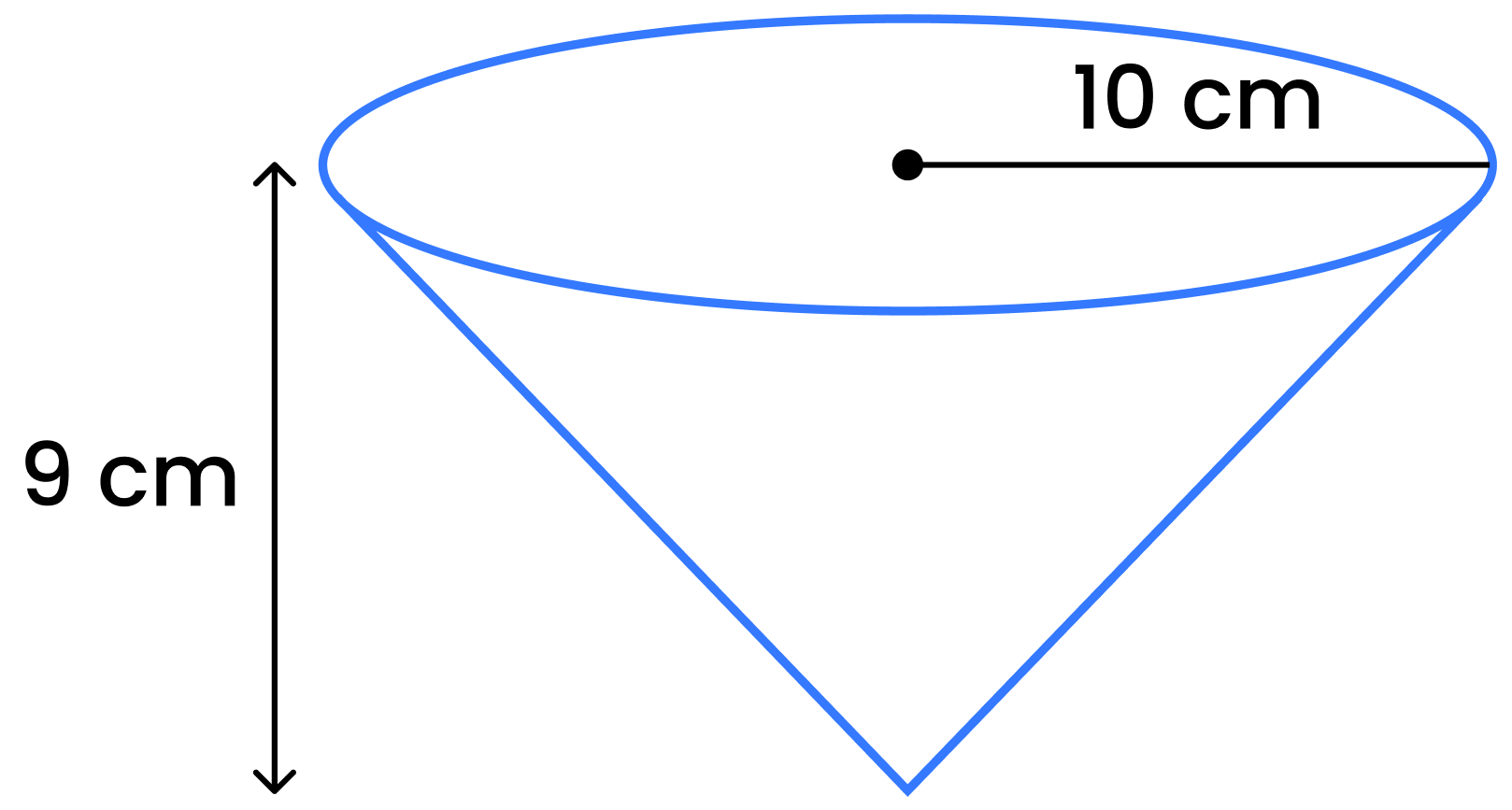 Edited  |
A cone has a radius of $10$ cm and a perpendicular height of $9$ cm.
Find its volume in exact form.
|
A cone has a radius of $4$ in and a perpendicular height of $3.5$ in.
Find its volume in exact form.
|
Rationale: Metric units (cm) are present in both the image labels and the text fields. The radius is given as 10 cm and the height as 9 cm, and the suffix is cm³. All metric units must be converted to US customary (inches). This is a straightforward geometry question with no complex formula re-derivation needed, so RED.units_simple_conversion applies. Image edit: Only change '10 cm' to '4 in' in the radius label on the top circular face, keep everything else the same | Only change '9 cm' to '3.5 in' in the vertical height arrow label on the left side, keep everything else the same
|
| 01K0RMVPSCQN1DJ8DE2J8BQBYB | Localize | Units (convert) | Original 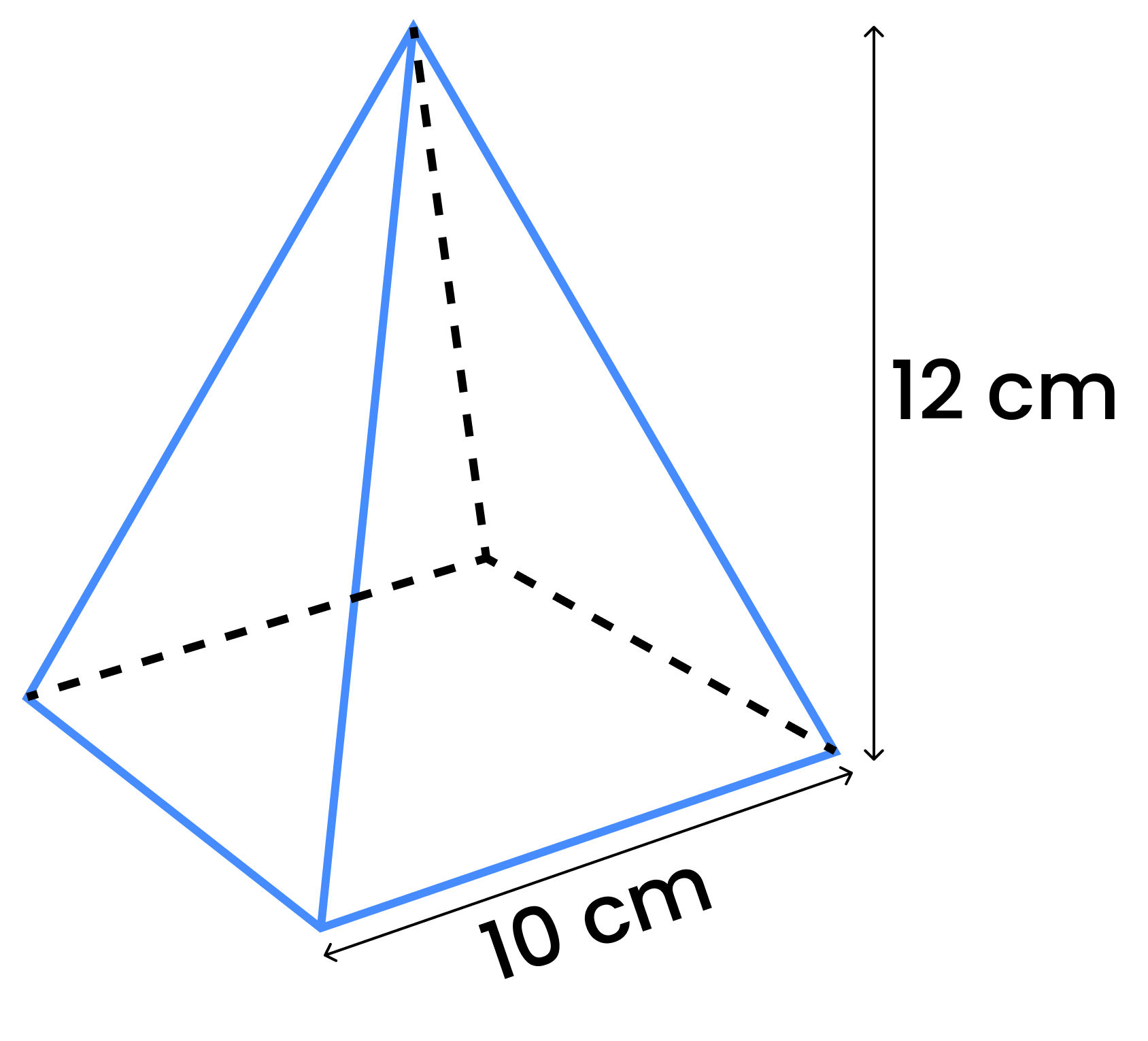 Edited  |
A pyramid is $12$ m high and has a square base with sides of $10$ m.
Find the volume.
|
A pyramid is $39$ ft high and has a square base with sides of $33$ ft.
Find the volume.
|
Rationale: Metric units (m, m^3) are present in both the text fields and the image labels (12 cm, 10 cm shown in the diagram). All metric units must be converted to US customary equivalents. Note: the image shows "cm" labels while the text uses "m" — the image appears to be a generic diagram with cm labels, while the question text uses m. Both must be converted. Image edit: Only change '12 cm' to '39 ft' in the height label on the right side of the image, keep everything else the same | Only change '10 cm' to '33 ft' in the base side label at the bottom of the image, keep everything else the same
|
| 1B6XmOslP9WjRFzAyB1O | Localize | Terminology (AU→US) | Original 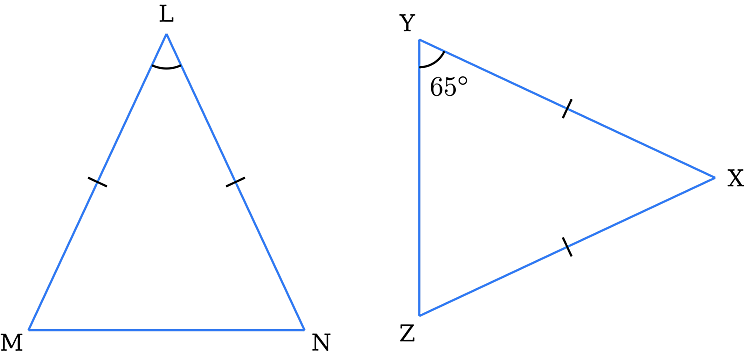 |
Given $\triangle LMN \cong \triangle XYZ$ and $XY=XZ$, find the measure of $\angle L$.
|
No changes |
Rationale: The skill title references "congruency" which is Australian/British terminology. The US equivalent is "congruence". No metric units appear anywhere in the text fields or in the image. The image contains only triangle diagrams with vertex labels (L, M, N, X, Y, Z), tick marks indicating equal sides, an angle arc at L and Y, and a 65° angle label — no metric units. The only AU-specific content is the terminology "congruency" in the skill title context, and the question itself uses standard mathematical notation. The content field uses "congruency" implicitly through the skill context but the question text itself is already US-compatible. No spelling changes needed. No unit conversions needed. |
| 31Us0QeNivSwTbhCsC7M | Localize | RED.units_complex_converted | Original 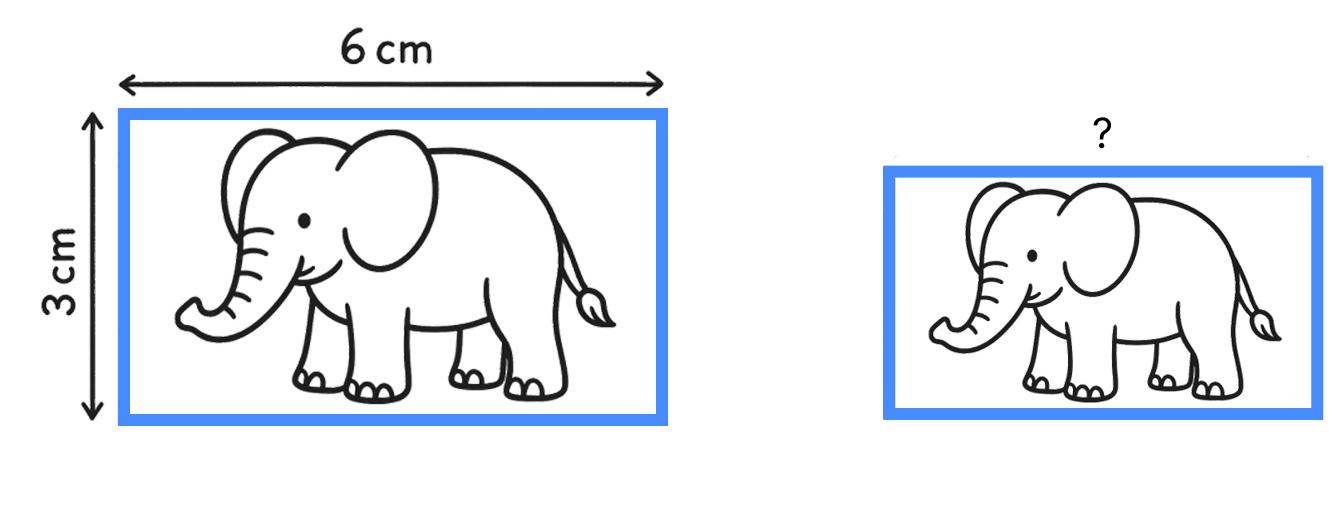 Edited  |
Mya draws an elephant inside a rectangle and then creates a smaller version by scaling the rectangle proportionally.
If the area of the smaller rectangle is $2.88$ cm$^2$, find its length.
Hint: Area scale factor=$k^2$
|
Mya draws an elephant inside a rectangle and then creates a smaller version by scaling the rectangle proportionally.
If the area of the smaller rectangle is $0.4$ in$^2$, find its length.
Hint: Area scale factor=$k^2$
|
Rationale: The question contains metric units (cm, cm²) in the text, suffix, image labels, and answer. The image shows a rectangle labeled 6 cm wide and 3 cm tall. The question involves an area value (2.88 cm²) and asks for a length answer (2.4 cm). Converting these requires careful handling: the original rectangle is 6 cm × 3 cm = 18 cm², and the smaller rectangle has area 2.88 cm². The scale factor k² = 2.88/18 = 0.16, so k = 0.4, giving smaller length = 6 × 0.4 = 2.4 cm and smaller height = 3 × 0.4 = 1.2 cm. Converting to inches: 6 cm ≈ 2.4 in, 3 cm ≈ 1.2 in. To keep clean pedagogy, I will use 6 cm → 2.4 in and 3 cm → 1.2 in for the image. The area in the original rectangle becomes 2.4 × 1.2 = 2.88 in². The smaller rectangle area: k² × 2.88 in² = 0.16 × 2.88 = 0.46 in² (rounded to 1 decimal: 0.5 in²). The answer length = 2.4 × 0.4 = 0.96 in ≈ 1.0 in. However, this involves interdependent recalculations across area and length values, so RED.units_complex_converted is appropriate. Image edit: Only change '6 cm' to '2.4 in' in the horizontal width label above the left rectangle, keep everything else the same | Only change '3 cm' to '1.2 in' in the vertical height label on the left side of the left rectangle, keep everything else the same
|
| 37TON8Q4Ol1vTlmKzt4U | Skip | No change needed | Original 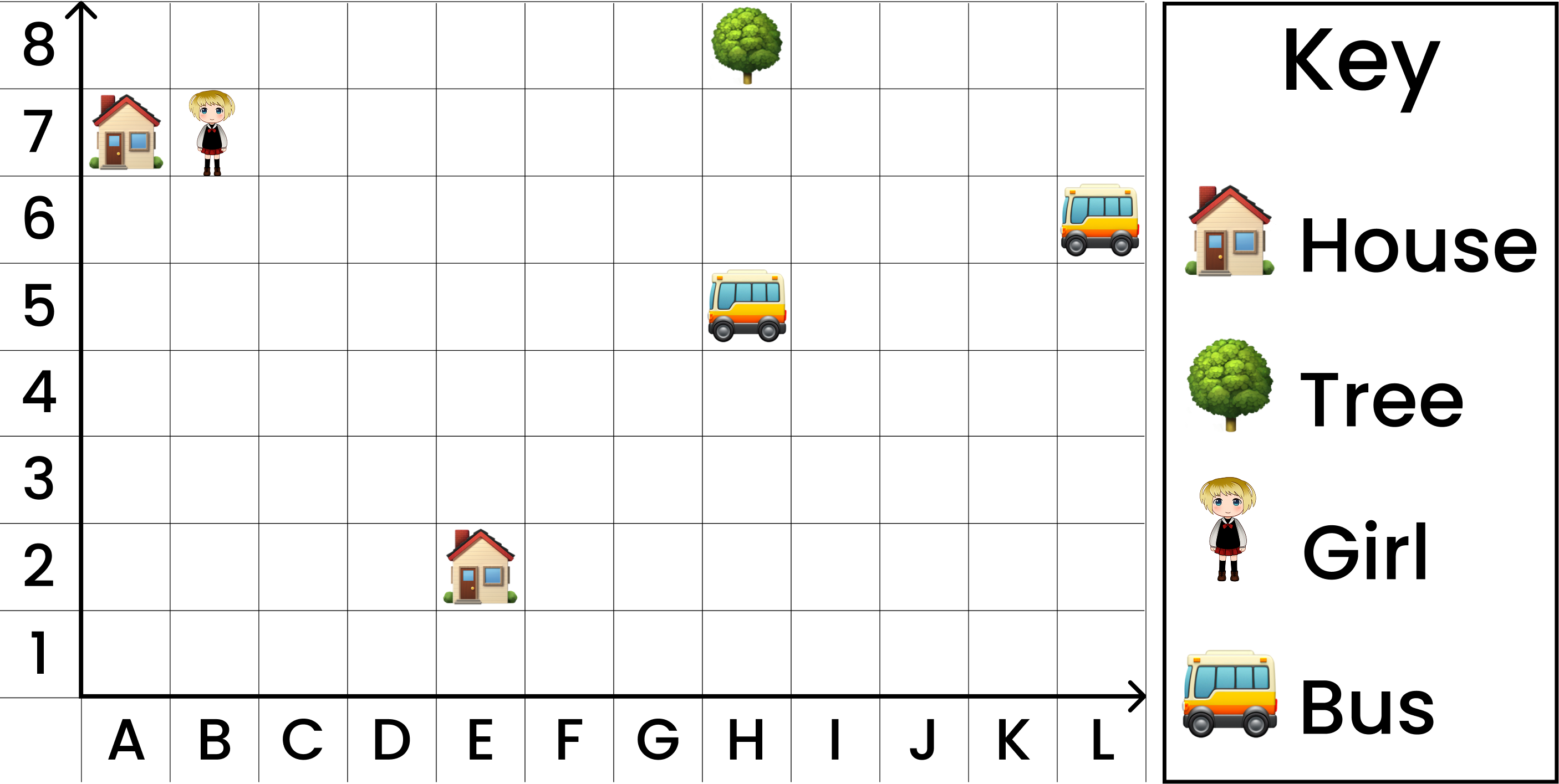 |
What is located on the grid next to $\text{A}7$ ?
|
No changes |
Rationale: The question, answers, and image contain no Australian-specific spelling, terminology, metric units, or cultural references. The grid uses letter-number coordinates (A-L, 1-8) with no units. All content (House, Tree, Girl, Bus) is universally neutral. No conversions are needed. |
| 4Us8H2aTVm5FOeaSN4BW | Localize | Units (convert) | Original 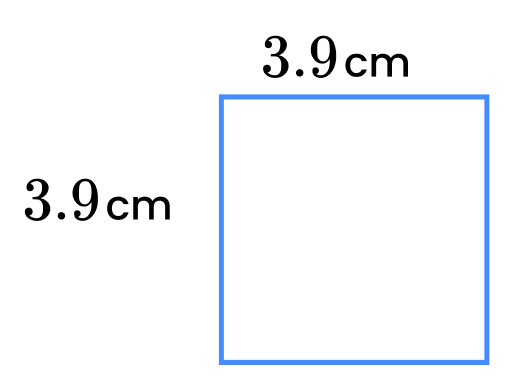 Edited  |
Find the area of a rectangle whose length and width are both equal to $3.9$ cm.
|
Find the area of a rectangle whose length and width are both equal to $1.54$ in.
|
Rationale: Metric units (cm) are present in the question text, suffix, and image labels. All metric units must be converted to US customary (inches). The square is labeled 3.9 cm on both sides in the image and the question text references 3.9 cm. This is a straightforward unit conversion with no complex formula re-derivation needed. Image edit: Only change '3.9 cm' (top label above the square) to '1.54 in', keep everything else the same | Only change '3.9 cm' (left side label beside the square) to '1.54 in', keep everything else the same
|
| HjhXqbVa3NpgLaKQGv7v | Localize | Units (convert) | Original 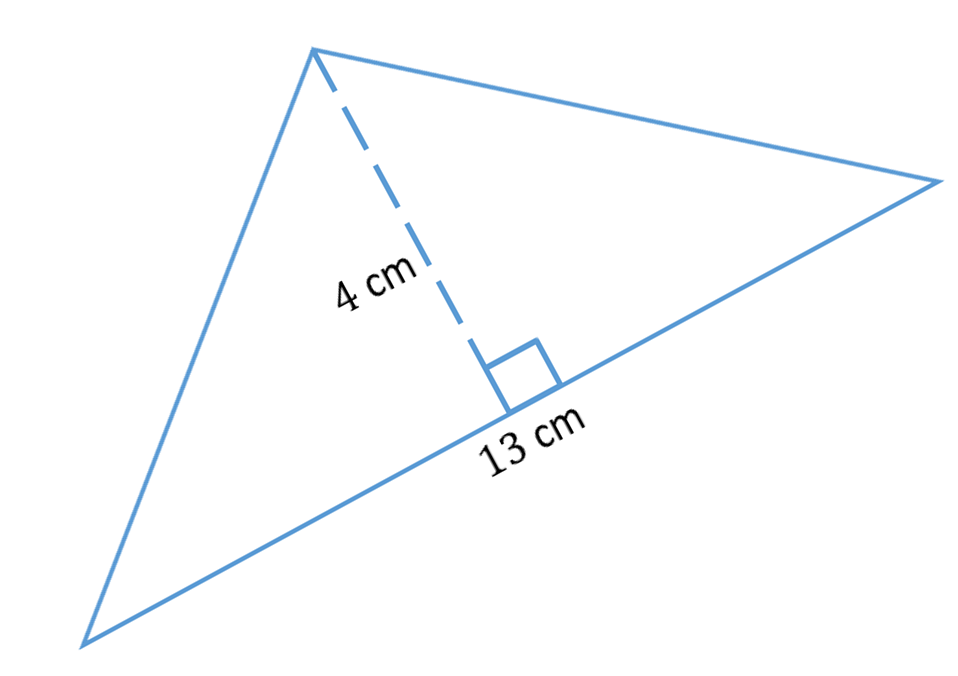 Edited  |
Find the area of the given triangle.
|
Find the area of the given triangle.
|
Rationale: The image contains metric unit labels: "4 cm" (height) and "13 cm" (base). The suffix field contains "cm$^2$". These are Australian metric units that must be converted to US customary (inches). The question content itself has no AU-specific text beyond the units in the image and suffix. Image edit: Only change '4 cm' to '2 in' on the dashed height label, keep everything else the same | Only change '13 cm' to '5 in' on the base label, keep everything else the same
|
| P13M9h74lMacJwB0tqmD | Localize | Units (convert) | Original 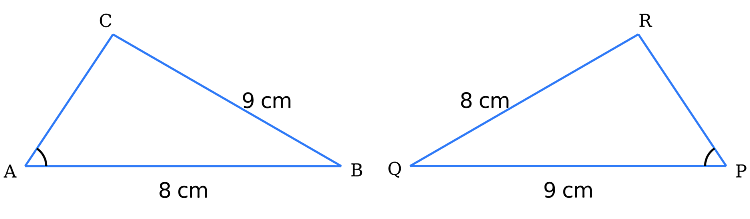 Edited  |
What congruency rule applies to the given triangles?
Hint: This diagram is not drawn to scale.
|
What congruence theorem applies to the given triangles?
Hint: This diagram is not drawn to scale.
|
Rationale: The image contains metric unit labels (cm) on the triangle sides: "9 cm", "8 cm", "8 cm", "9 cm". These must be converted to US customary (inches). Additionally, the question text uses AU terminology "congruency" which should be converted to "congruence", and the answer "No congruency rule applies" must also be updated. The skill title references "RHS" which is AU terminology for the HL theorem, but the answer options do not include RHS so no change needed there. Image edit: Only change '9 cm' (label on side CB of left triangle) to '3.5 in', keep everything else the same | Only change '8 cm' (label on base AB of left triangle) to '3 in', keep everything else the same | Only change '8 cm' (label on side QR of right triangle) to '3 in', keep everything else the same | Only change '9 cm' (label on base QP of right triangle) to '3.5 in', keep everything else the same
|
| QMTe7V1ZrBeDqN3CpkVV | Localize | RED.units_complex_converted | Original  Edit requested (no output)
|
Fill in the blank:
|
Fill in the blank:
|
Rationale: The image contains metric units: cm³ (cubic centimeters) and L (liters). Both must be converted to US customary units: cubic inches and gallons. The question teaches conversion between volume units (cm³ to L), which must be re-expressed as cubic inches to gallons. The conversion factor relationship changes: 1 L = 1000 cm³ in metric; 1 gallon = 231 cubic inches in US customary. The original question asks how many cm³ = 25000 L, answer = 25,000,000 cm³. Converting: 25000 L × 0.264172 = 6604.3 gallons (round to 6604 gallons). Then ? cubic inches = 6604 gallons: 6604 × 231 = 1,525,524 cubic inches. This is a complex multi-step recalculation involving unit relationship re-derivation, so RED.units_complex_converted is appropriate. Image edit: Only change 'cm³' to 'in³' in the left-side unit label next to the question mark box, keep everything else the same | Only change '25000' to '6604' in the right-side answer box, keep everything else the same | Only change 'L' to 'gal' in the right-side unit label next to the answer box, keep everything else the same
|
| WWVbTMqpKgJjXBuxPWY5 | Localize | Units (convert) | Original 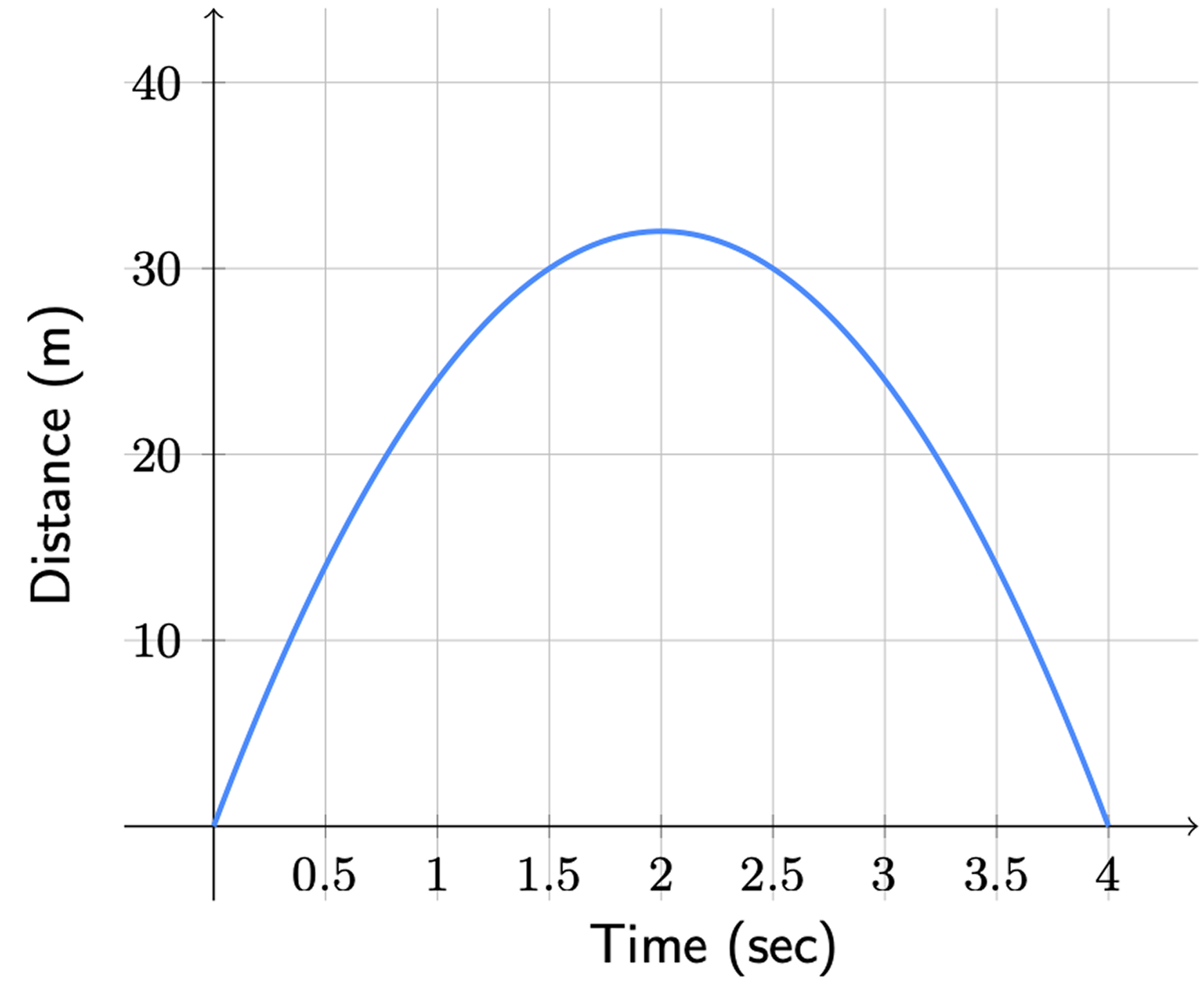 Edited  |
The graph below represents the height of a ball thrown in the air.
When is the maximum height reached by the ball?
|
Image edit only (no text changes) |
Rationale: The image contains a y-axis labeled "Distance (m)" — metres is a metric unit that must be converted to feet per the conversion policy. The x-axis uses seconds (not metric), and the question text and answers contain no AU spelling or terminology issues beyond the unit in the image. The unit "m" (metres) in the image axis label triggers RED.units_simple_conversion. Image edit: Only change the y-axis label "Distance (m)" to "Distance (ft)" in the image, keep everything else the same | Only change the y-axis tick label "40" to "130" in the image, keep everything else the same | Only change the y-axis tick label "30" to "100" in the image, keep everything else the same | Only change the y-axis tick label "20" to "65" in the image, keep everything else the same | Only change the y-axis tick label "10" to "33" in the image, keep everything else the same
|
| Xf22MZvkM4SW8SvtOVmu | Localize | Units (convert) | Original 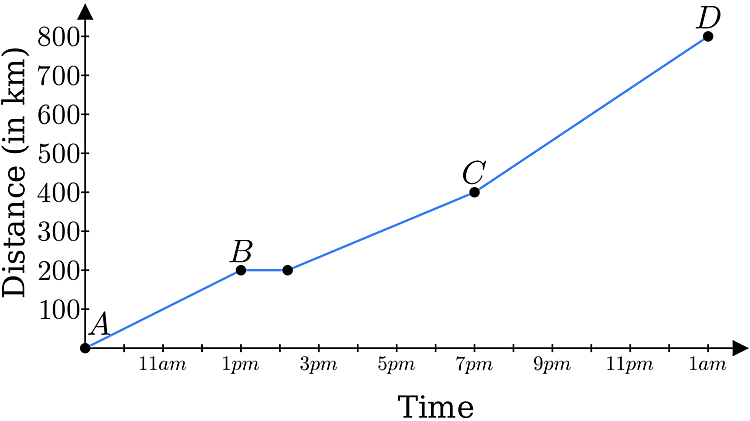 Edited  |
The graph shows a train's journey from station $A$ at $11$ am to station $D$ as it passes through station $B$ and $C$.
What distance (in km) does the train cover from station $C$ to station $D$ ?
|
The graph shows a train's journey from station $A$ at $11$ am to station $D$ as it passes through station $B$ and $C$.
What distance (in miles) does the train cover from station $C$ to station $D$ ?
|
Rationale: The question and image both contain metric units (km) on the y-axis of the graph and in the question text and suffix. These must be converted to US customary (miles). The y-axis label reads "Distance (in km)" and the suffix is "km". All metric units must be converted per policy. Image edit: Only change the y-axis label "Distance (in km)" to "Distance (in miles)", keep everything else the same | Only change the y-axis tick label "100" to "60" (representing ~60 miles), keep everything else the same | Only change the y-axis tick label "200" to "125" (representing ~125 miles), keep everything else the same | Only change the y-axis tick label "300" to "185" (representing ~185 miles), keep everything else the same | Only change the y-axis tick label "400" to "250" (representing ~250 miles), keep everything else the same | Only change the y-axis tick label "500" to "310" (representing ~310 miles), keep everything else the same | Only change the y-axis tick label "600" to "375" (representing ~375 miles), keep everything else the same | Only change the y-axis tick label "700" to "435" (representing ~435 miles), keep everything else the same | Only change the y-axis tick label "800" to "500" (representing ~500 miles), keep everything else the same
|
| YnwvhYAY1QrdhLKu5Xdo | Localize | Units (convert) | Original 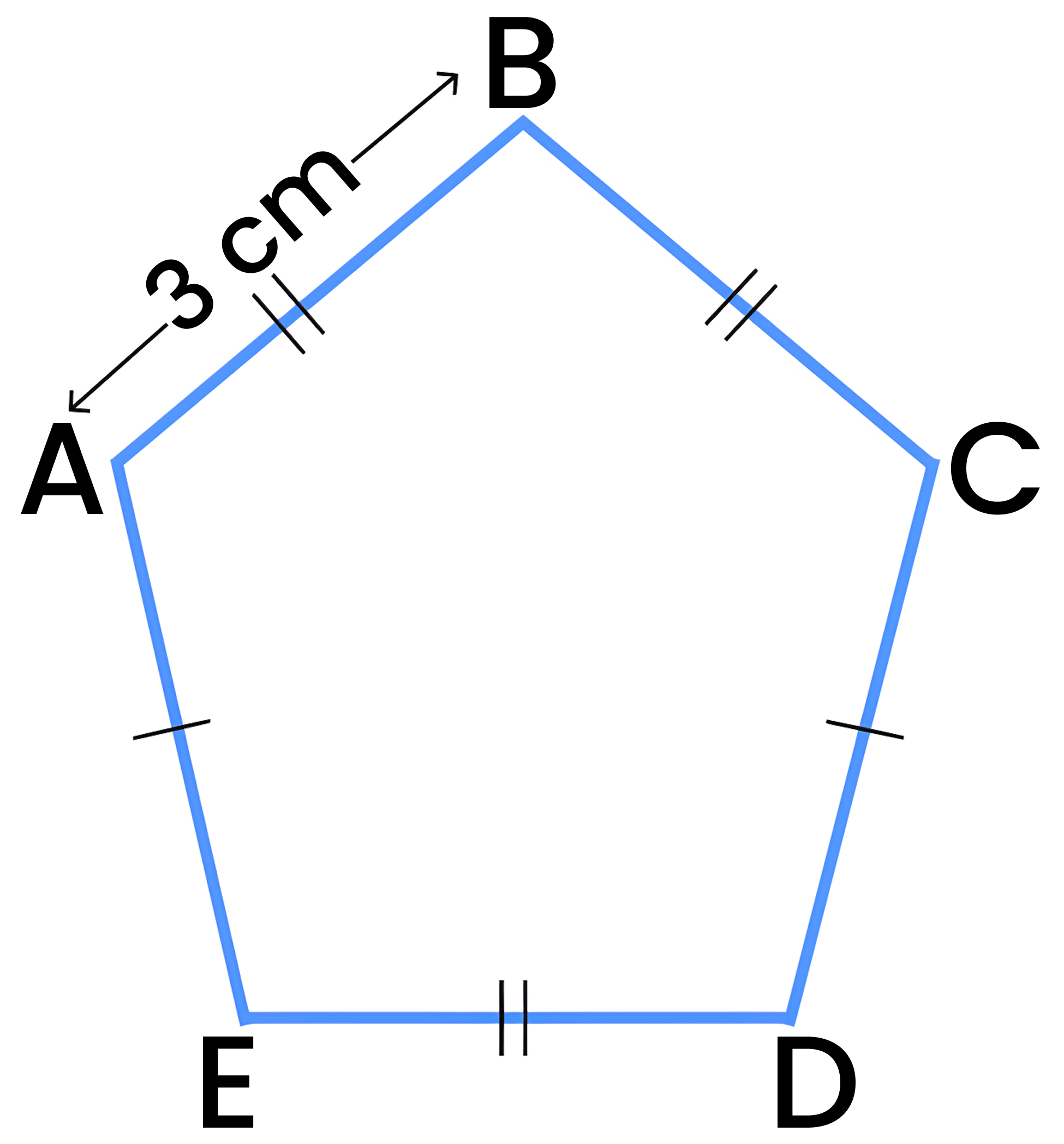 Edited  |
Find the length of $AE$ if the perimeter of the figure is $19$ cm.
|
Find the length of $AE$ if the perimeter of the figure is $7$ in.
|
Rationale: Metric units are present in both the image (3 cm label) and the text fields (19 cm in content, cm in suffix). All metric units must be converted to US customary (inches). The perimeter and side length values must be recalculated accordingly. Image edit: Only change '3 cm' to '1 in' in the side annotation label between vertices A and B, keep everything else the same
|
| b0r3bLbncNtebkuxEoyh | Localize | Units (convert) | Original 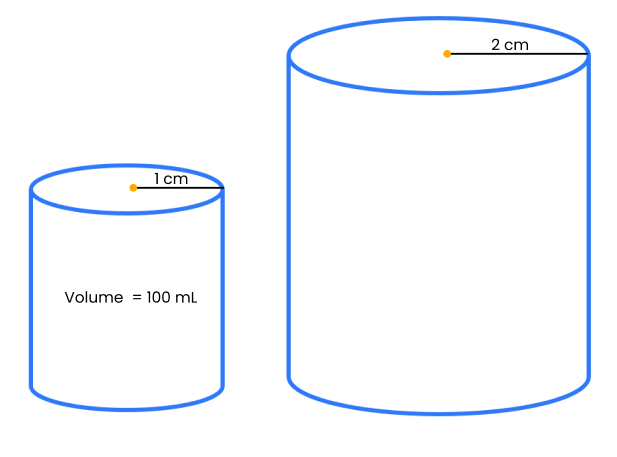 Edited  |
The smaller shape is enlarged by a factor of $2$.
What is the volume of the larger shape?
|
The smaller shape is enlarged by a factor of $2$.
What is the volume of the larger shape?
|
Rationale: Metric units are present in both the image (cm labels on both cylinders) and in the text fields (mL suffix). These must all be converted to US customary equivalents. The volume of the smaller cylinder is 100 mL and the larger is 800 mL (scale factor 2, so volume factor 8). mL converts to fluid ounces (1 mL = 0.034 fl oz). 100 mL ≈ 3.4 fl oz; 800 mL ≈ 27.2 fl oz. However, the answer must be a whole number integer. 800 × 0.034 = 27.2, which rounds to 27 fl oz. The image also shows radius labels of 1 cm and 2 cm which must be converted to inches (1 cm ≈ 0.4 in, 2 cm ≈ 0.8 in). Image edit: Only change '1 cm' to '0.4 in' in the radius label on the smaller cylinder, keep everything else the same | Only change '2 cm' to '0.8 in' in the radius label on the larger cylinder, keep everything else the same | Only change 'Volume = 100 mL' to 'Volume = 3 fl oz' in the text inside the smaller cylinder, keep everything else the same
|
| bCYwUqo9cta2dItwGRWN | Skip | No change needed | Original 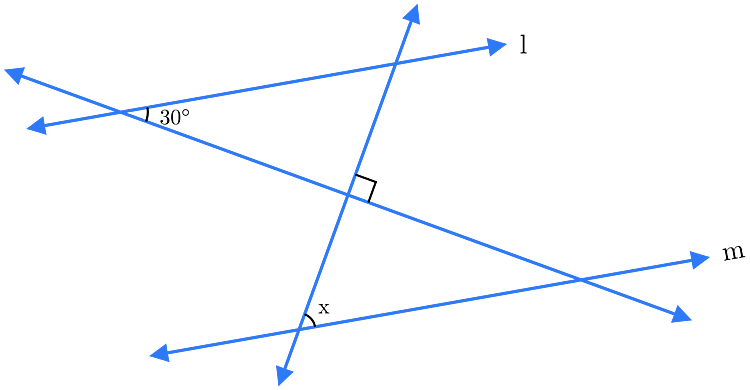 |
Given that $l\parallel{m}$, find the measure of angle $x$.
Hint: The symbol $\parallel$ means 'is parallel to'.
|
No changes |
Rationale: No Australian-specific content found in any text field or in the image. The image contains only geometric lines, angle labels (30°, x, a right-angle square symbol), and line labels (l, m) — no metric units, no AU spelling, no AU terminology. All text fields use standard mathematical language with no AU-specific spelling, terminology, or units. |
| cg3bJF2NJrQ5NbaJ7G2I | Skip | No change needed | Original 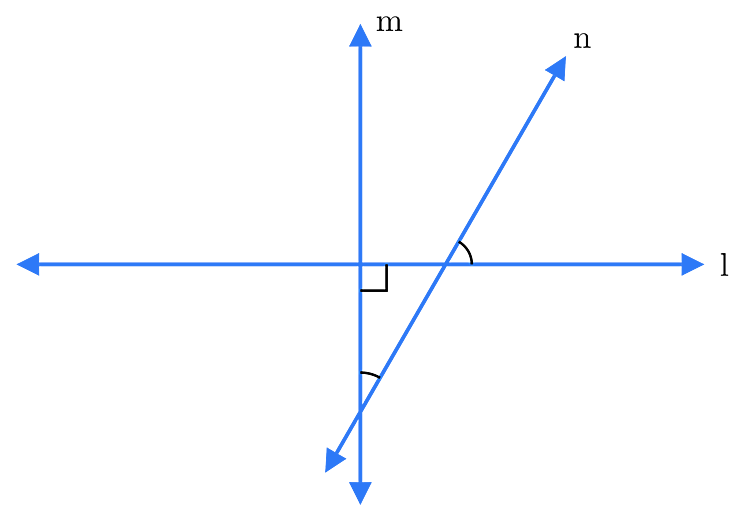 |
Identify the pair of perpendicular lines.
|
No changes |
Rationale: No Australian-specific content found in any text fields or in the image. The image contains only geometric lines labeled l, m, and n with a right-angle marker and an angle arc — no metric units, no AU spelling, no AU terminology. The question text and all answer options contain no AU-specific spelling, terminology, units, or cultural references. |
| l8eMbZmZVxMhI7FZX10N | Skip | No change needed | Original 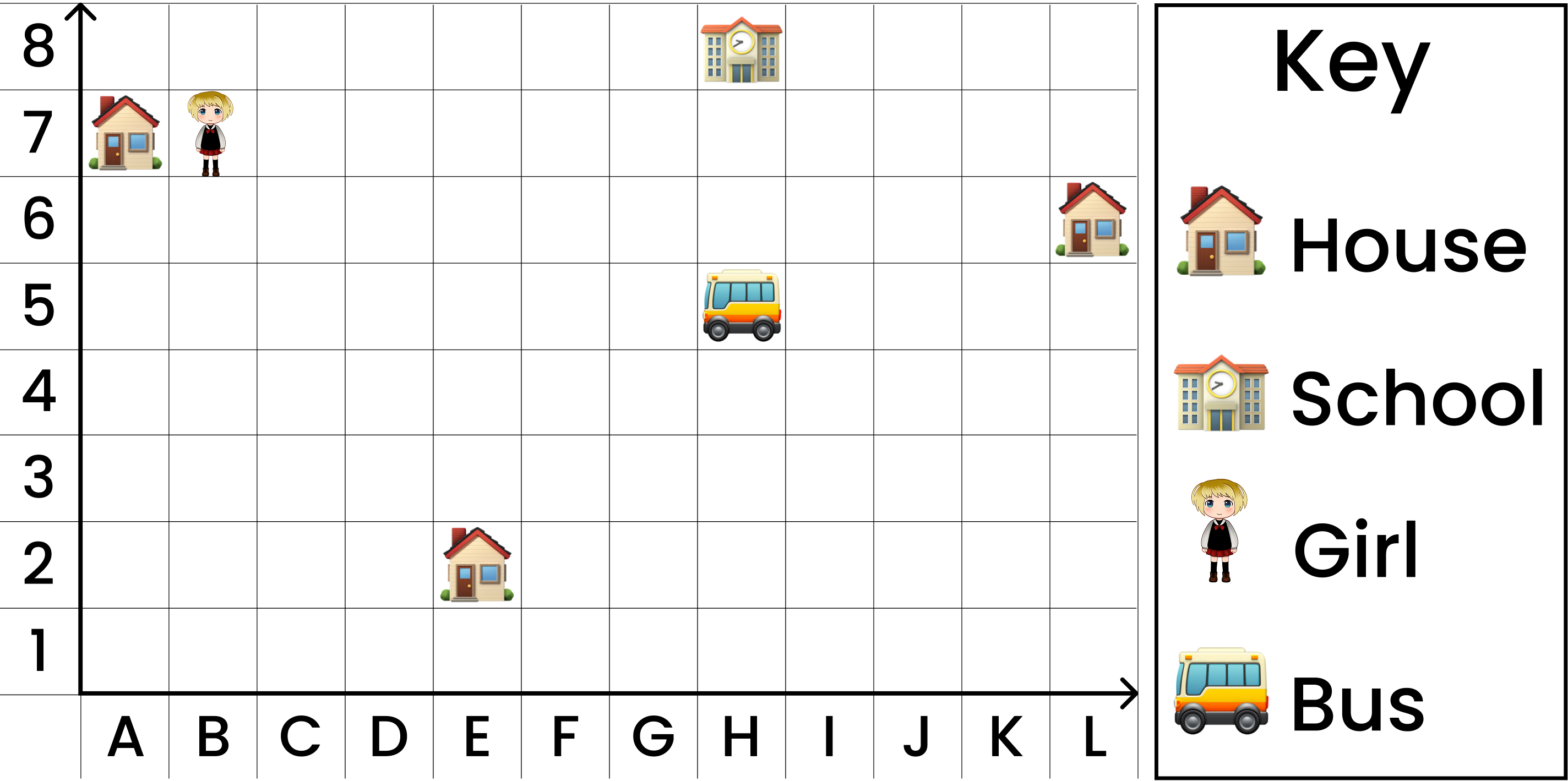 |
Where is the school?
Write its location using the letter and number, like '$\text{A}1$'.
|
No changes |
Rationale: The question involves interpreting grid references on a coordinate map. There are no metric units anywhere in the text fields or in the image. There is no Australian spelling, no AU-specific terminology, no currency, no date formats, and no cultural references that require localization. The image contains only a coordinate grid with letter-number labels (A–L on x-axis, 1–8 on y-axis), emoji-style icons (house, school, girl, bus), and a key — none of which are AU-specific. The question and answers are fully neutral and require no changes. |
| mqn_01J81FJ7ESMWHX27STWWCYGEPK | Skip | No change needed | Original 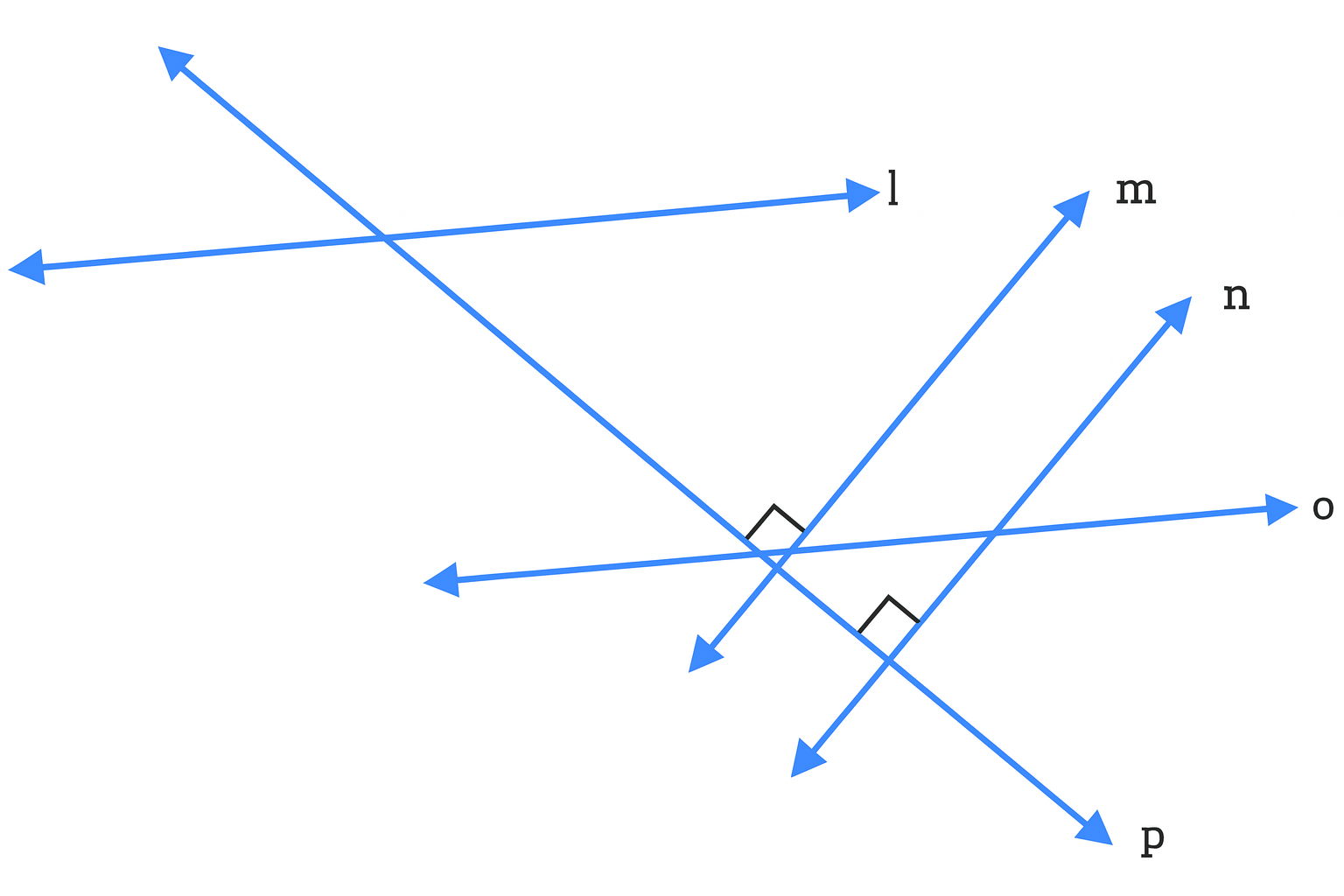 |
True or false:
Line $m$ is parallel to $p$ .
|
No changes |
Rationale: The question text contains no AU-specific spelling, terminology, or metric units. The image shows geometric lines labeled l, m, n, o, p with right-angle markers — no metric units, no AU spelling, no AU cultural references. All content is already in US-compatible form. |
| mqn_01J91GHAVGEQ3J4B8FQVB3FAJ5 | Localize | Units (convert) | Original 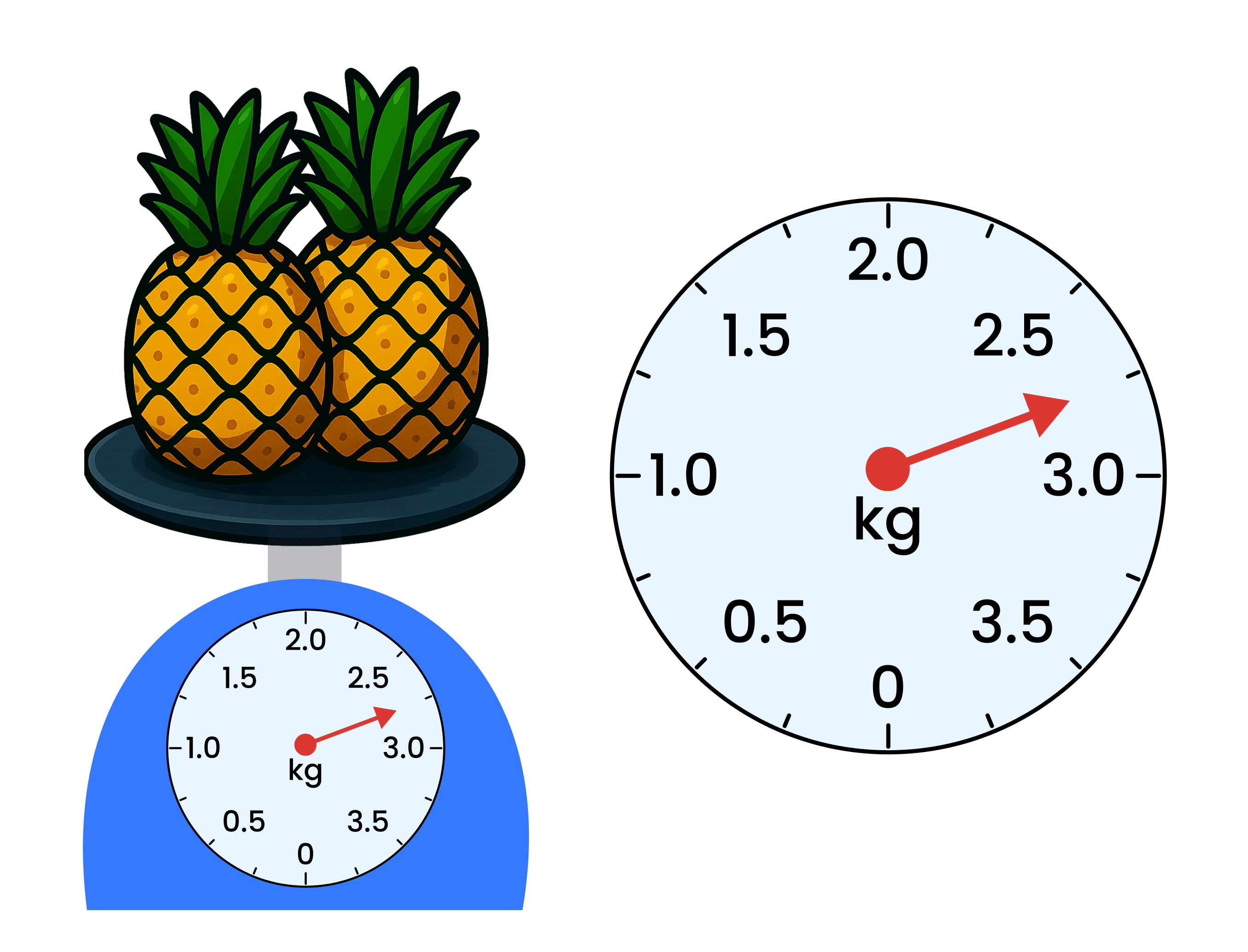 Edited  |
What is the approximate weight of the pineapples?
|
What is the approximate weight of the pineapples?
|
Rationale: The image contains a kitchen scale with kg markings (0, 0.5, 1.0, 1.5, 2.0, 2.5, 3.0, 3.5 kg) and the answers all use kg. All metric units must be converted to US customary (pounds). The scale readings and answer values must be converted from kilograms to pounds. Image edit: Change the unit label "kg" in the center of the scale dial (both the small dial on the scale and the large zoomed dial) to "lb" | Change the scale marking "0.5" to "1" on both dials | Change the scale marking "1.0" to "2" on both dials | Change the scale marking "1.5" to "3" on both dials | Change the scale marking "2.0" to "4" on both dials | Change the scale marking "2.5" to "6" on both dials | Change the scale marking "3.0" to "7" on both dials | Change the scale marking "3.5" to "8" on both dials
|
| mqn_01J9AS1DN8P5A6AFBP5R8CARAK | Skip | No change needed | Original 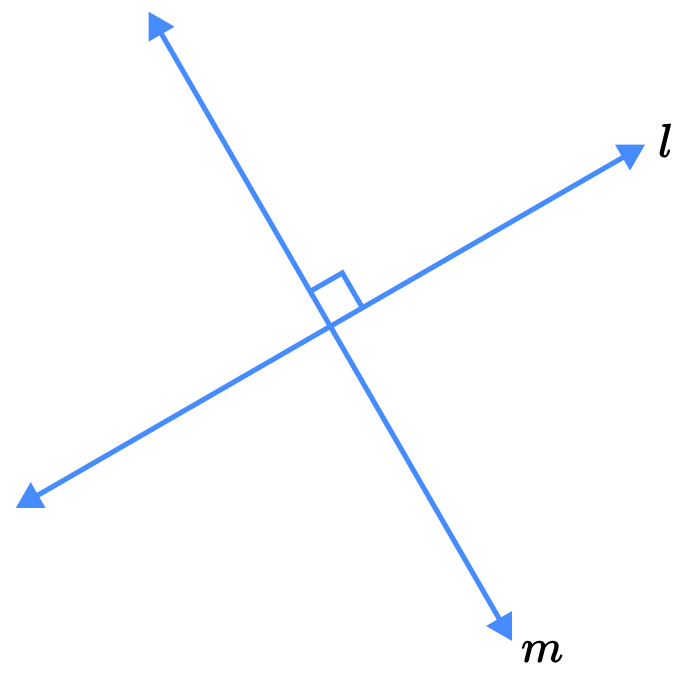 |
Fill in the blank:
The line $l$ is $[?]$ to the line $m$.
|
No changes |
Rationale: The question text, answers, and image contain no Australian-specific spelling, terminology, units, or cultural references. The image shows two intersecting lines labeled 'l' and 'm' with a right-angle marker — no metric units, no AU spelling, no AU terminology. The question uses universally standard mathematical language ("perpendicular", "parallel"). No localization is needed. |
| mqn_01J9ASPK0S8JWFJYHY3NZE0ZYN | Skip | No change needed | Original 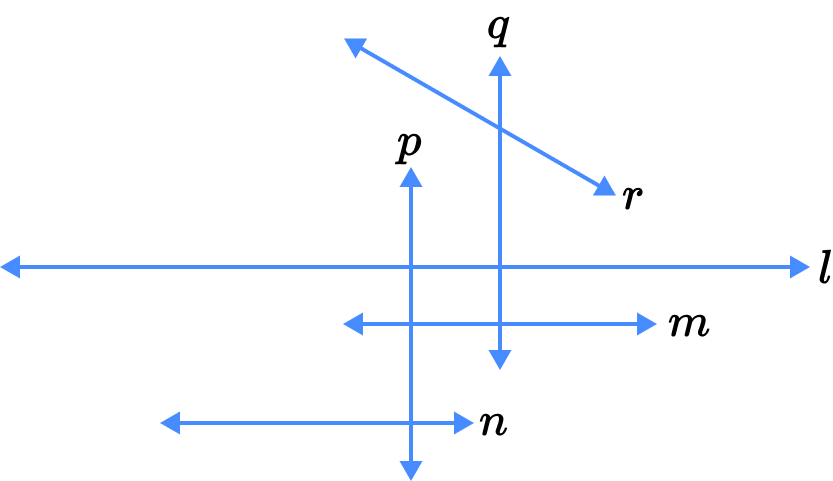 |
How many pairs of perpendicular lines are there in the given image?
|
No changes |
Rationale: The question text, answers, and image contain no Australian-specific spelling, terminology, units, or cultural references. The image shows geometric lines labeled with single letters (l, m, n, p, q, r) with no metric units, AU spelling, or AU-specific content anywhere. The question is purely about recognising/recognizing perpendicular lines using abstract letter labels. No conversions or edits are needed. |
| mqn_01JMRVCYBF7E3XRDQ8APM16N0C | Skip | No change needed | Original 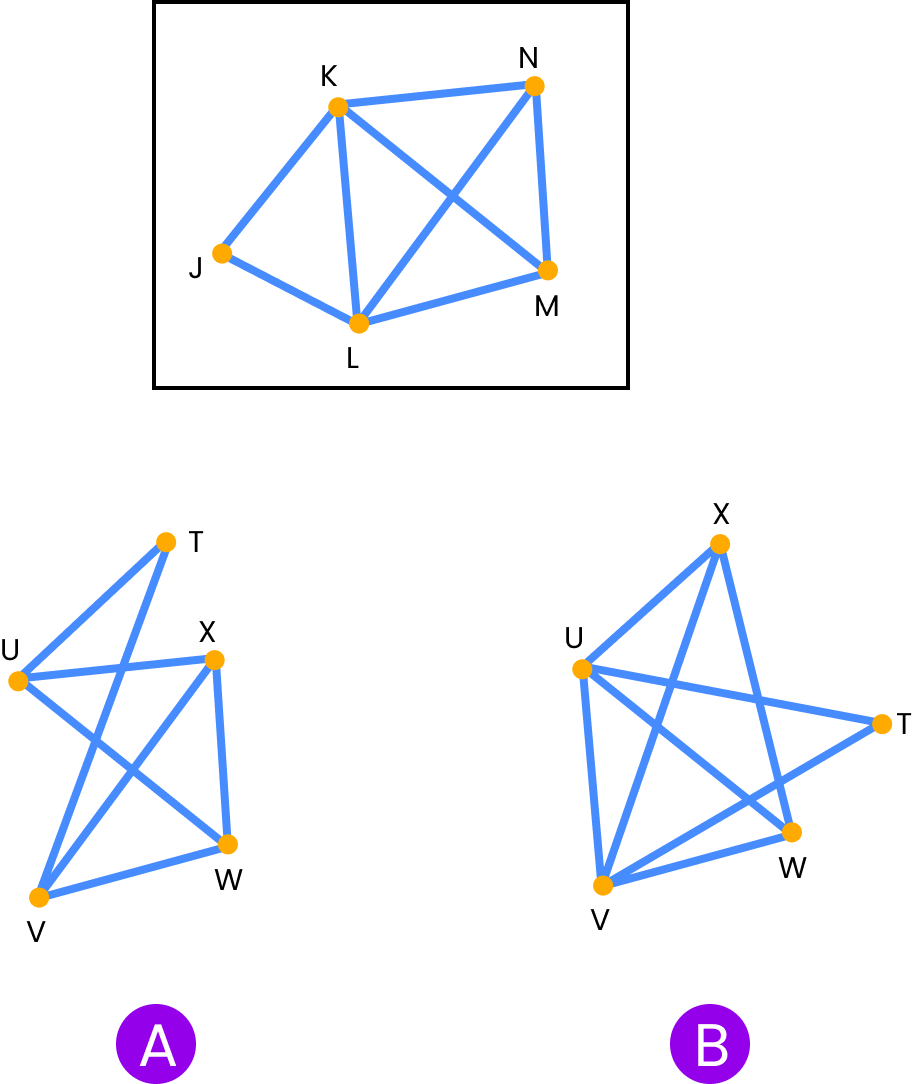 |
Which of the following is isomorphic to the given graph?
|
No changes |
Rationale: The question and all answer fields contain no Australian-specific spelling, terminology, units, or cultural references. The image contains only graph theory diagrams with vertex labels (letters) and edges — no metric units, no AU spelling, no AU terminology. This is a pure mathematics graph theory question about isomorphic graphs with zero AU-specific content anywhere. |
| mqn_01JMX4E2HXP7FMZBA48SDT7J9C | Skip | No change needed | Original 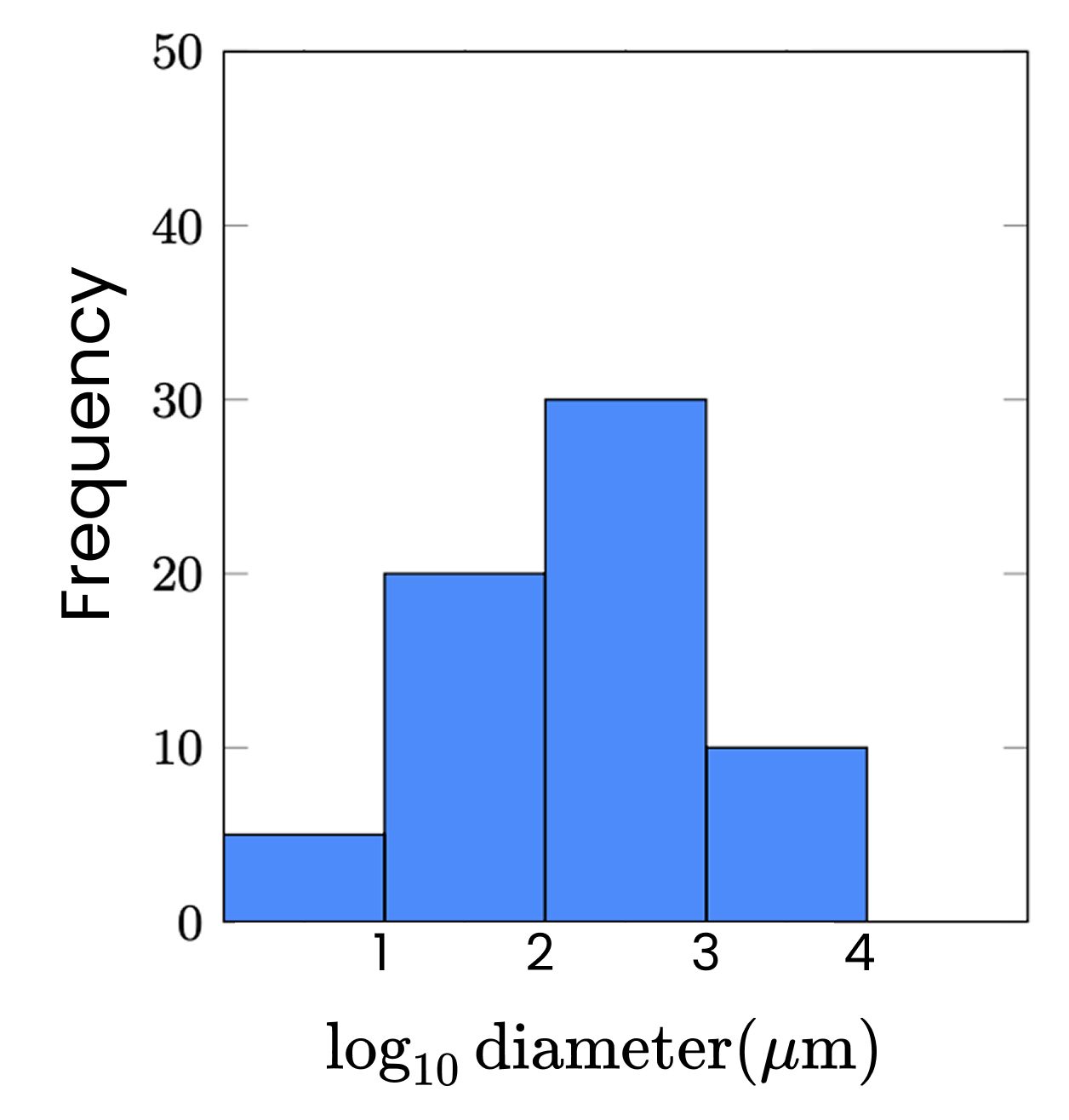 |
The histogram shows particle diameters from a soil sample.
Which particle size bin has the lowest frequency?
|
No changes |
Rationale: The unit µm (micrometres/micrometers) is a scientific/SI unit used universally in both AU and US contexts for particle size measurement. It is not an AU-specific unit requiring conversion to US customary — there is no US customary equivalent for µm in soil science contexts. The image axes use log₁₀ diameter in µm, which is standard scientific notation used identically in the US. No AU spelling, terminology, currency, date formats, or other AU-specific content is present in any text field or in the image. The question is about interpreting a histogram with a logarithmic scale, which is purely mathematical/scientific content with no localization needed. |
| mqn_01JW2N9NZQ7MXGXN1N4SRFXBAY | Skip | No change needed | Original 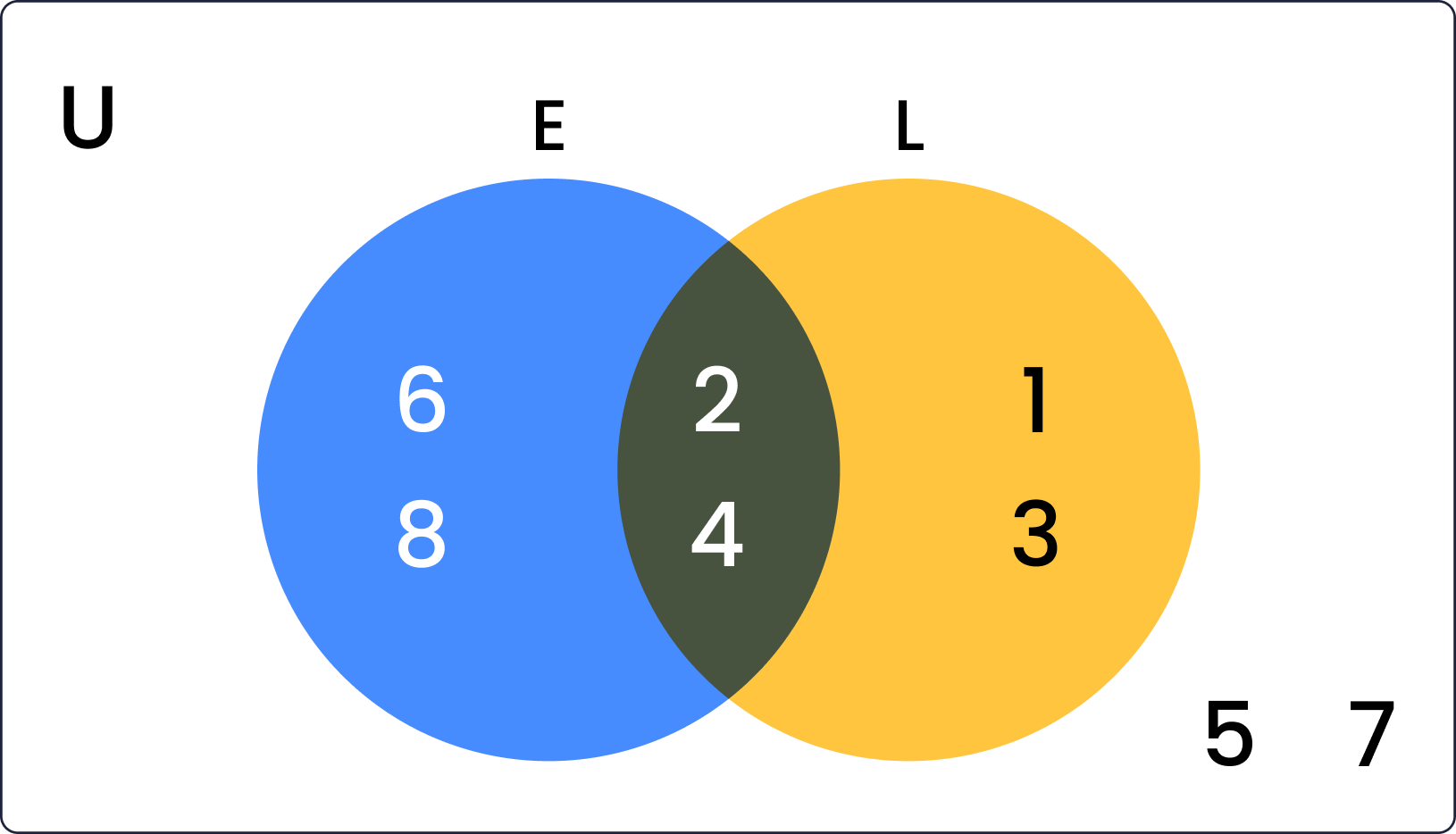 |
Which set represents $U$?
|
No changes |
Rationale: The question and all answer fields contain only mathematical set notation with no AU-specific spelling, terminology, units, or cultural references. The image is a standard Venn diagram with two overlapping circles labeled E and L within a universal set U, containing only numerals (1–8). No metric units, AU spelling, AU school terminology, or AU cultural content is present anywhere in the text fields or the image. |
| mqn_01K03B71YGZ6RQZY3XWRHYZWGE | Skip | No change needed | Original 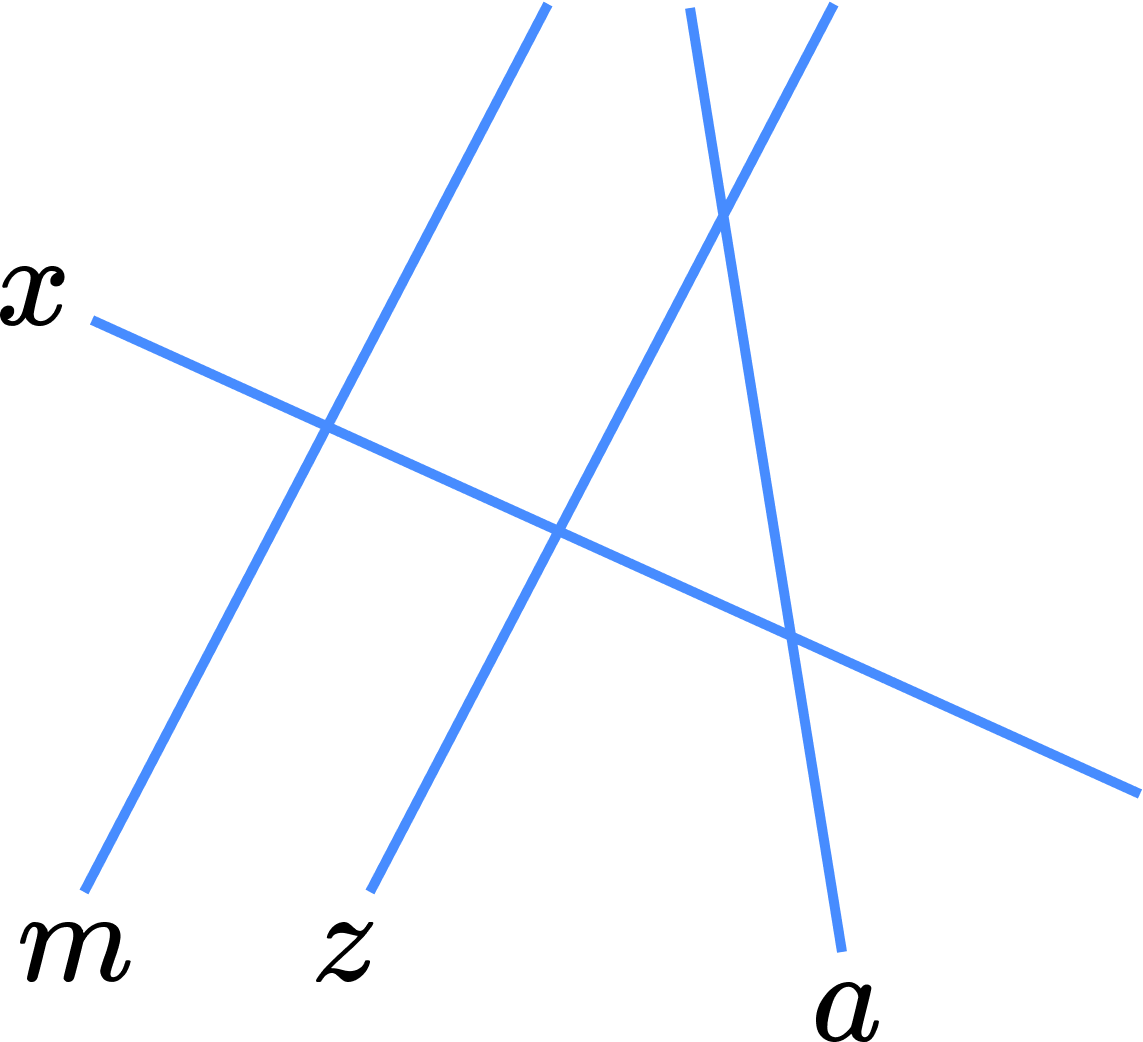 |
Which of the following lines is not considered a transversal?
|
No changes |
Rationale: The question and all answer fields contain no Australian-specific spelling, terminology, units, or cultural references. The image shows four intersecting lines labeled x, m, z, and a — no metric units, no AU spelling, no AU terminology. This is a pure geometry/terminology question about transversals with no localization needed. |
| mqn_01K03BFG6V343GG1FEHCAZW31Y | Skip | No change needed | Original  |
Which of the following is a transversal that intersects exactly three lines?
|
No changes |
Rationale: The question and all answer fields contain no Australian-specific spelling, terminology, or metric units. The image shows four labeled lines (x, m, z, a) with no units, no AU spelling, no AU cultural references, and no metric measurements. This is a pure geometry/terminology question about transversals that requires no localization. |
| mqn_01K03WFYJ8EYNFC6YRHWK8G503 | Localize | Units (convert) | Original 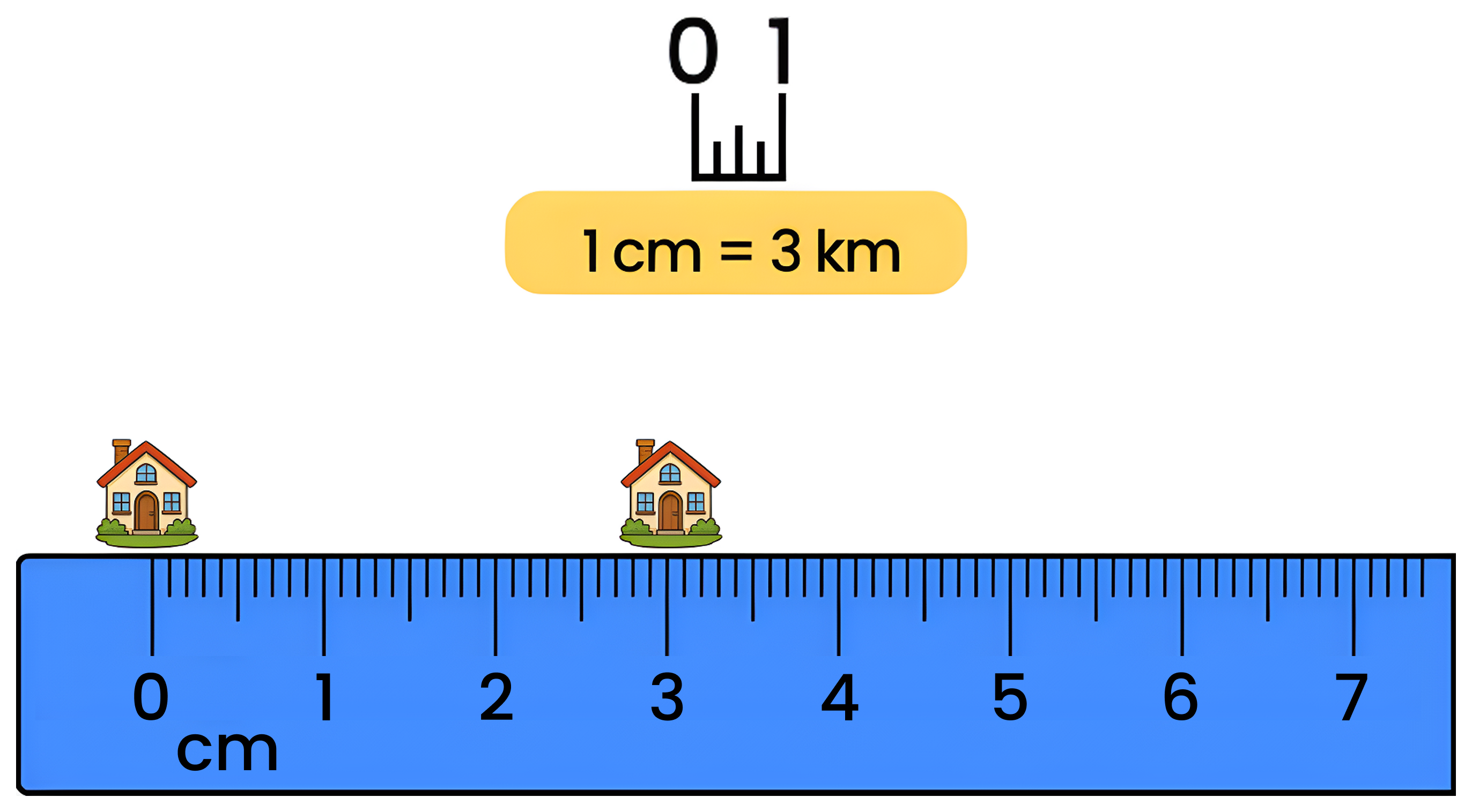 Edited  |
What is the real distance between the two houses?
|
What is the real distance between the two houses?
|
Rationale: The image contains metric units: a ruler labelled in cm and a map scale stating "1 cm = 3 km". The answer choices all use km. Both cm and km are metric units that must be converted to US customary (inches and miles respectively). The map scale must be recalculated: 1 cm ≈ 0.394 in, 3 km ≈ 1.864 miles. For pedagogical cleanliness, the scale is expressed as a clean ratio. The two houses appear at 0 cm and 3 cm on the ruler, giving a map distance of 3 cm. At 1 cm = 3 km, the real distance is 9 km. Converting: 3 cm ≈ 1.2 in on the ruler; 9 km ≈ 5.6 miles. Clean pedagogical values: ruler shows houses at 0 in and ~1.2 in; scale 1 in = 4.7 miles gives 9 km ≈ 5.6 miles. To keep round numbers, the scale is best expressed as 1 in = 5 miles, with the ruler distance at approximately 1 in, giving a real distance of 5 miles. However, to preserve the mathematical integrity of the original question (3 map units × 3 = 9 real units), the cleanest US conversion is: ruler distance = 1 in (approx 3 cm), scale 1 in = 5 miles, real distance = 5 miles. Adjusting answer set accordingly. Image edit: Only change the ruler unit label 'cm' (bottom left of the blue ruler) to 'in', keep everything else the same. | Only change the scale label '1 cm = 3 km' (in the yellow rounded rectangle) to '1 in = 5 miles', keep everything else the same. | Only change the scale bar numbers '0' and '1' above the scale bar to '0' and '1' (unchanged), but ensure the unit context reflects inches — no other changes to the scale bar tick marks.
|
| mqn_01K041NWPDPRBJMY79B9GPQEQ6 | Localize | RED.units_complex_converted | Original 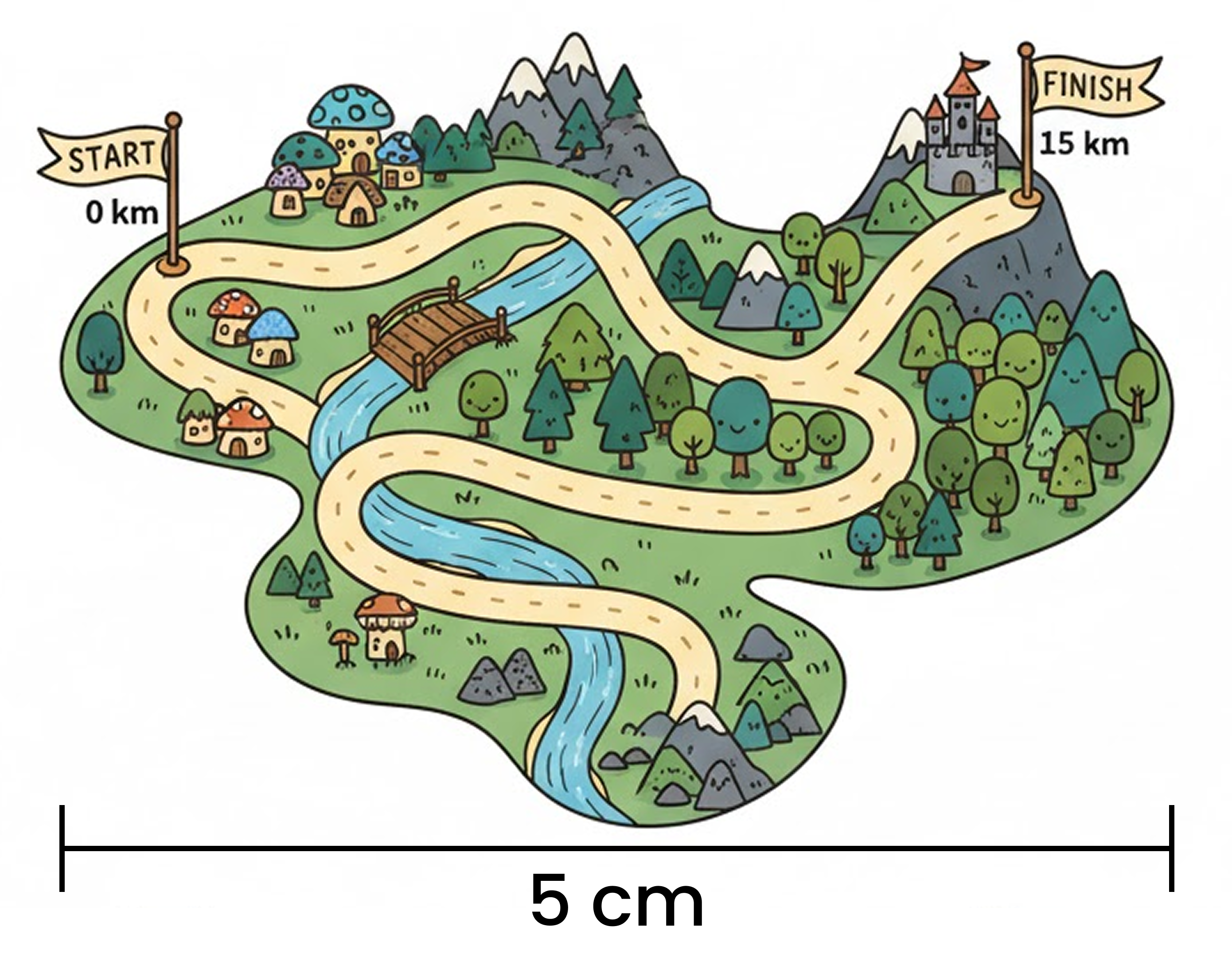 Edit requested (no output)
|
Lena is designing a map of a hiking trail that is $15$ km long.
She wants the trail to fit into a space of $5$ cm on her map.
What scale should she use?
|
Lena is designing a map of a hiking trail that is $9$ miles long.
She wants the trail to fit into a space of $2$ inches on her map.
What scale should she use?
|
Rationale: The question contains metric units (km, cm) in both the text fields and the image (START 0 km, FINISH 15 km, 5 cm scale bar). These must be converted to US customary units. This is classified as RED.units_complex_converted because the question involves a map scale relationship between two different unit types (cm on map vs. km in real world), and converting both to US customary (inches vs. miles) requires recalculating the scale ratios across all answer options. The correct answer changes from "1 cm = 3 km" to a miles-per-inch scale, requiring careful recalculation. The trail is 15 km ≈ 9.32 miles, fitting into 5 cm ≈ 1.97 inches on the map. Scale = 9.32 miles / 1.97 in ≈ 4.73 miles per inch. To keep clean numbers pedagogically: 15 km → 9 miles (rounded), 5 cm → 2 inches. Scale = 9 miles / 2 in = 4.5 miles per inch. Correct answer: 1 in = 4.5 miles. Distractors adjusted proportionally: original distractors were 4 km, 3 km (correct), 2.5 km, 5 km per cm. Converting: 4 km/cm → ~2.5 mi/in (using 1 km/cm = 1.609 mi/in × 0.394 in/cm... actually need to think in mi/in). 1 km/cm = (0.621 miles)/(0.394 inches) ≈ 1.576 mi/in. So: 4 km/cm → 6.3 mi/in, 3 km/cm → 4.73 mi/in (correct), 2.5 km/cm → 3.94 mi/in, 5 km/cm → 7.88 mi/in. Rounding to clean numbers: correct = 1 in = 4.5 miles, distractors: 1 in = 6 miles, 1 in = 4 miles, 1 in = 8 miles. Using the clean-number approach with 15 km → 9 miles and 5 cm → 2 inches: correct scale = 1 in = 4.5 miles. This requires human review due to the complexity of maintaining pedagogical integrity across all four answer options. Image edit: Only change '0 km' to '0 miles' on the START flag label, keep everything else the same | Only change '15 km' to '9 miles' on the FINISH flag label, keep everything else the same | Only change '5 cm' to '2 in' on the scale bar label below the map, keep everything else the same
|
| mqn_01K47BAQ684GGJR4GSVF5MVVNN | Skip | No change needed | Original 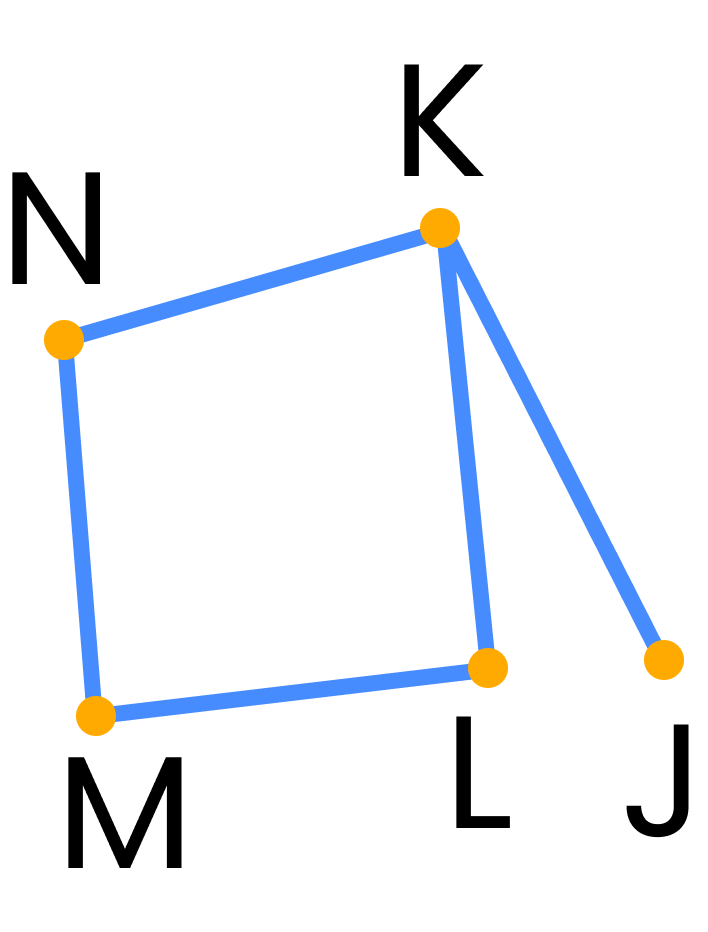 |
What type of walk is $K \to L \to M\to N\to K$ ?
|
No changes |
Rationale: No Australian-specific content found in any text fields or in the image. The question involves graph theory terminology (walk, cycle, trail) with vertex labels K, L, M, N, J. No metric units, no AU spelling, no AU terminology, no AU cultural references appear anywhere. |
| mqn_01K47BCRZDCY3XPJ2PCCT4HJWC | Skip | No change needed | Original 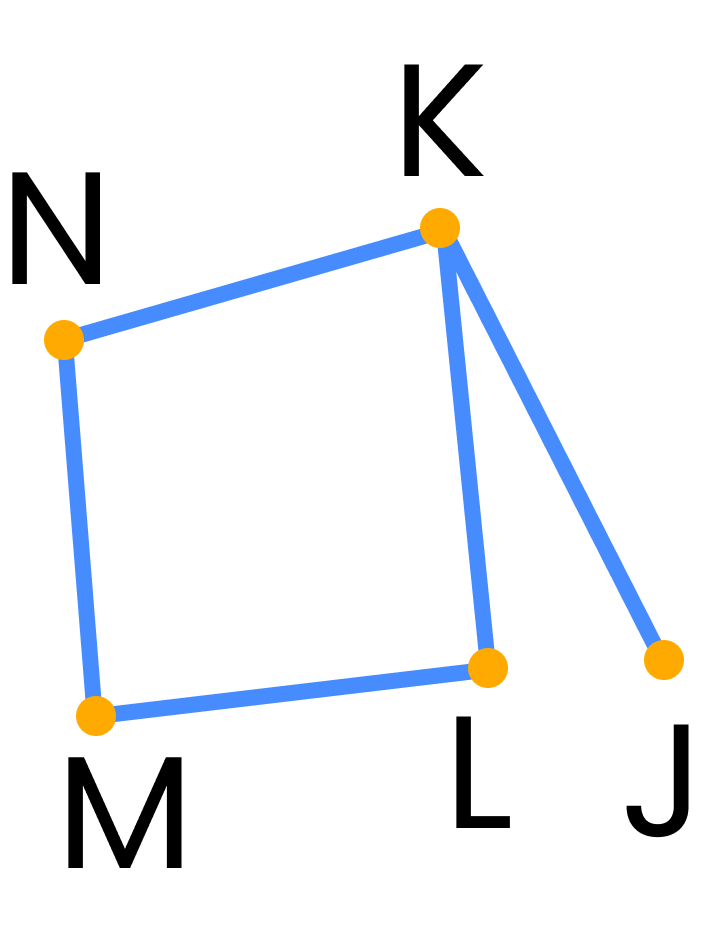 |
What type of walk is $J\to K \to L \to M\to N\to K \to J$ ?
|
No changes |
Rationale: The question involves graph theory (classifying walks in graphs) with no metric units, no Australian spelling, no Australian terminology, and no Australian cultural references anywhere in the text fields or the image. The image shows a graph with labeled vertices J, K, L, M, N connected by blue edges — no units, no AU-specific content. All fields are fully appropriate for a US audience without any changes. |
| mqn_01K47CQQMREZWSG134BQQ3S85E | Skip | No change needed | Original 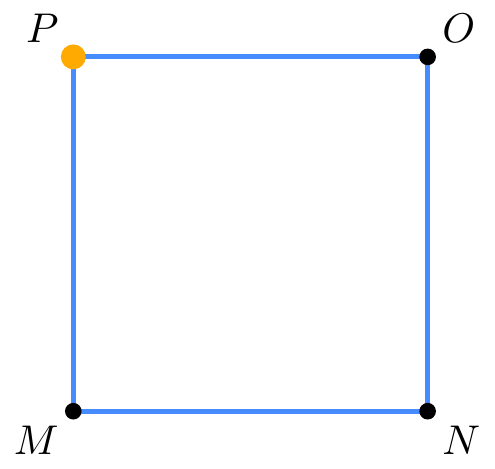 |
True or false:
The walk $M \to N \to O \to P$ is a circuit.
|
No changes |
Rationale: The question and image contain no Australian-specific spelling, terminology, units, or cultural references. The content is a pure graph theory / discrete mathematics question about walks and circuits using a square diagram with vertex labels M, N, O, P. No metric units appear anywhere in the text or image. No AU spelling variants are present. |
| mqn_01K47H3E0ADP9NGYTYA8HZ2VJD | Skip | No change needed | Original 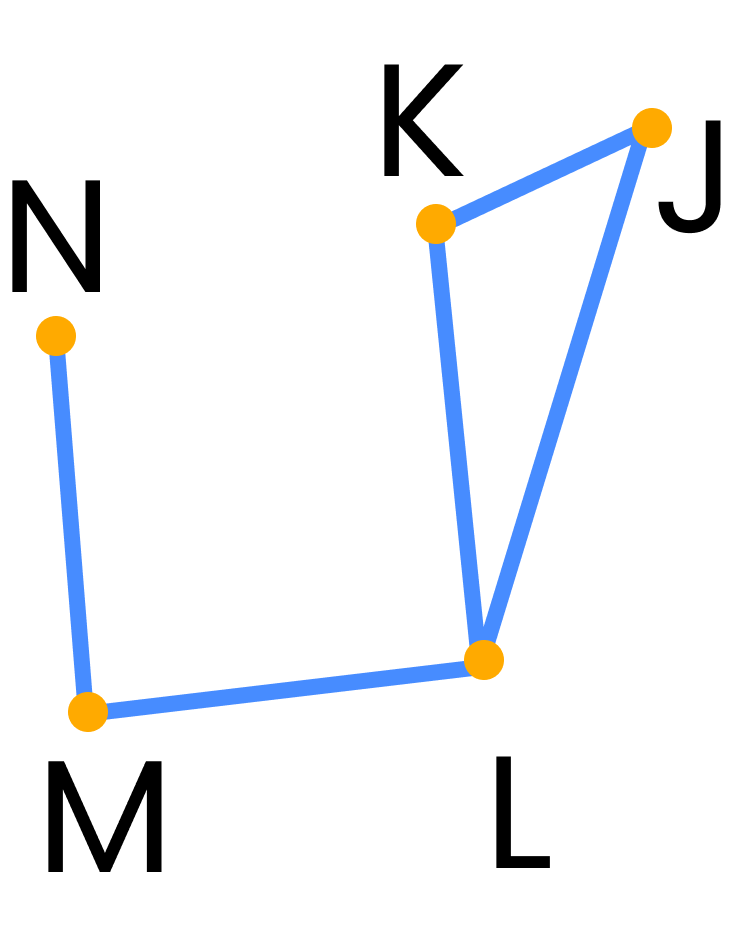 |
Which of the following is a cycle?
|
No changes |
Rationale: The question and all answer fields contain only graph theory terminology (cycles, vertex labels) with no Australian-specific spelling, terminology, units, or cultural references. The image shows a graph with labeled vertices (J, K, L, M, N) and edges — no metric units, no AU spelling, no AU school terminology. Nothing requires localization. |
| o0EjHGCWN3VeiadIUEr3 | Localize | Units (convert) | Original 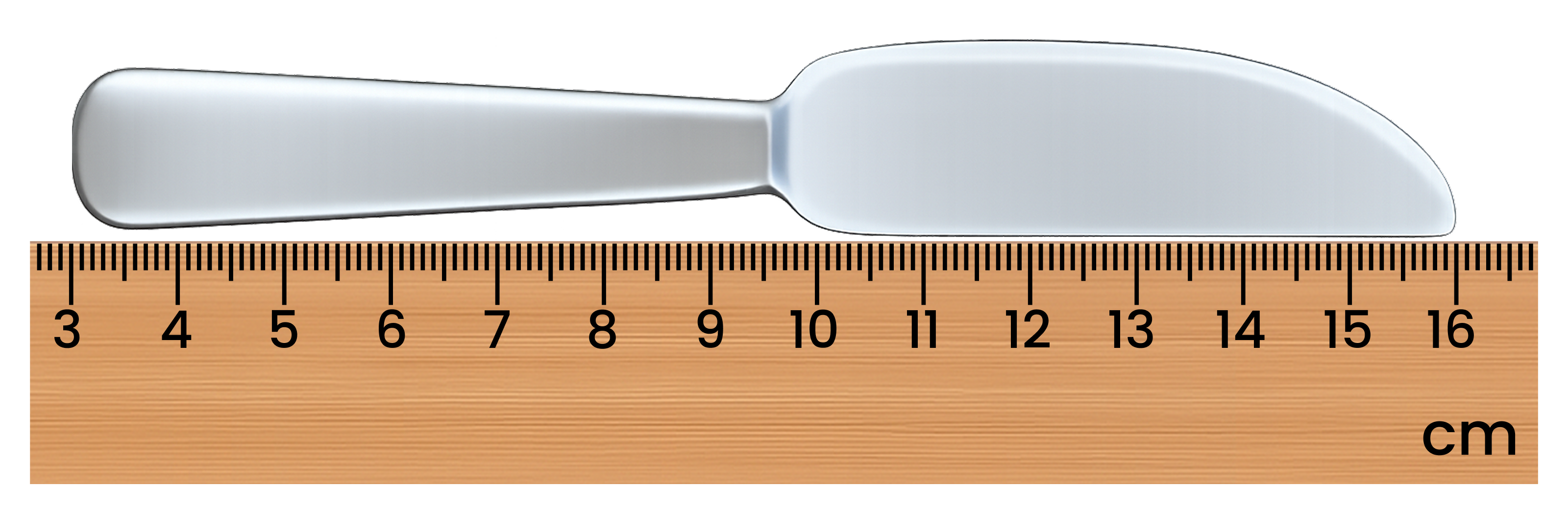 Edited  |
What is the length of the butterknife?
|
What is the length of the butterknife?
|
Rationale: The image shows a ruler with cm markings, and the suffix field contains "cm". The answer (13 cm) must be converted to inches. The ruler in the image also displays cm labels that need updating. This is a straightforward metric-to-US-customary conversion. Image edit: Replace the ruler scale numbers and unit label: change the numbered markings from "3, 4, 5, 6, 7, 8, 9, 10, 11, 12, 13, 14, 15, 16" to "1, 2, 3, 4, 5, 6" (representing inches, spaced proportionally), and change the unit label "cm" to "in", keeping all other visual elements the same.
|
| pne3X6JbkJ9MnzT2Zru3 | Localize | Units (convert) | Original 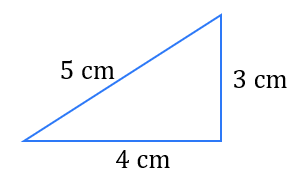 Edited  |
Find the area of the given triangle below using Heron's formula.
|
Find the area of the given triangle below using Heron's formula.
|
Rationale: The image contains metric unit labels (5 cm, 3 cm, 4 cm) and the suffix field contains cm$^2$. All metric units must be converted to US customary (inches). The triangle has sides 3-4-5 cm, a classic Pythagorean triple. Converting to inches: 3 cm * 0.394 ≈ 1.18 in, 4 cm * 0.394 ≈ 1.57 in, 5 cm * 0.394 ≈ 1.97 in. However, to preserve clean pedagogy and the integer answer constraint, the sides are scaled to 3-4-5 inches (a clean Pythagorean triple in inches). The area of a 3-4-5 right triangle is (1/2)*3*4 = 6 in², so the answer remains 6. This is consistent and pedagogically clean. Image edit: Only change '5 cm' to '5 in' on the hypotenuse label, keep everything else the same | Only change '3 cm' to '3 in' on the vertical right side label, keep everything else the same | Only change '4 cm' to '4 in' on the horizontal base label, keep everything else the same
|
| q7eVOu62csxizXVtc4h4 | Skip | No change needed | Original 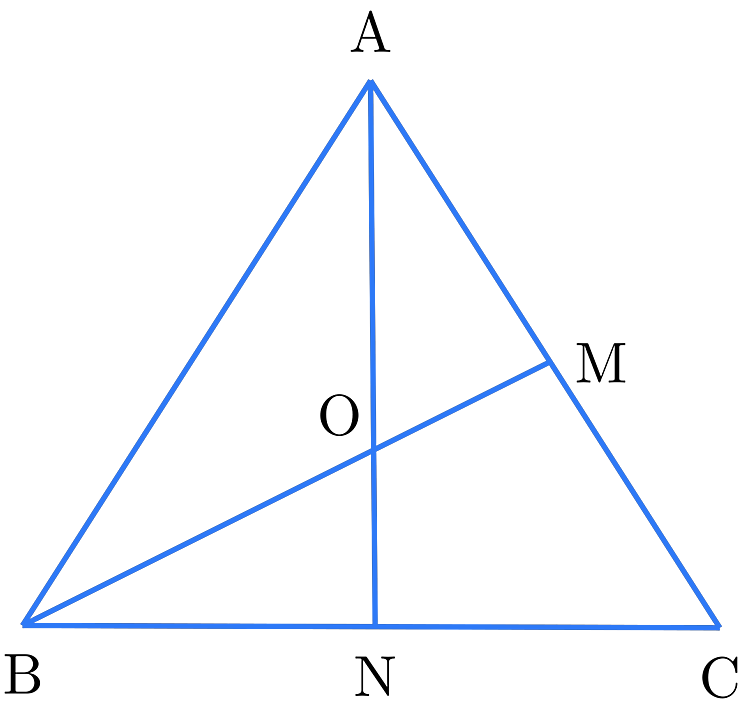 |
$\triangle ABC$ is equilateral. $BM$ and $AN$ are angle bisectors of the triangle.
Find the measure of $\angle AOB$.
|
No changes |
Rationale: No Australian-specific content found in any text field or in the image. The question involves a pure geometry problem about angle bisectors in an equilateral triangle. There are no metric units, no AU spelling, no AU terminology, no AU cultural references, and no AU school system references anywhere in the text or image. |
| rNhOdA0ABvVE9ueL4kds | Skip | No change needed | Original 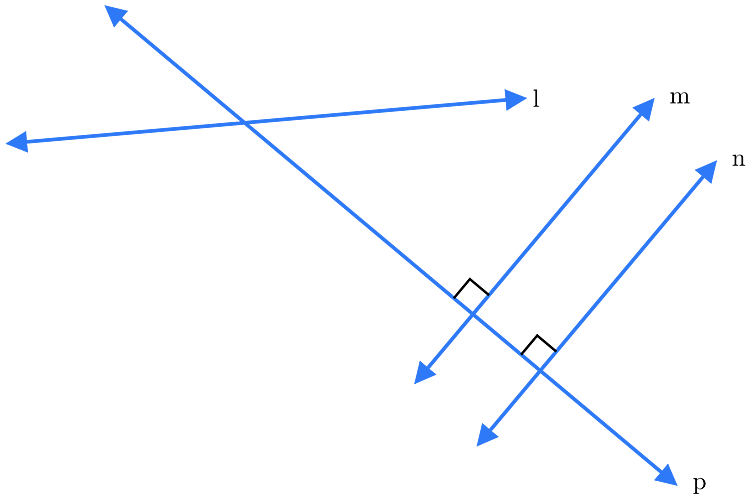 |
Which of the following lines is parallel to line $l$?
|
No changes |
Rationale: The question and all answer fields contain no Australian-specific spelling, terminology, or metric units. The image shows geometric lines labeled l, m, n, and p with right-angle markers — no metric units, no AU spelling, no AU cultural references. No localization is needed. |
| sqn_01J9JK3VQCKXHYE2E999PZ6PWX | Localize | Units (convert) | Original 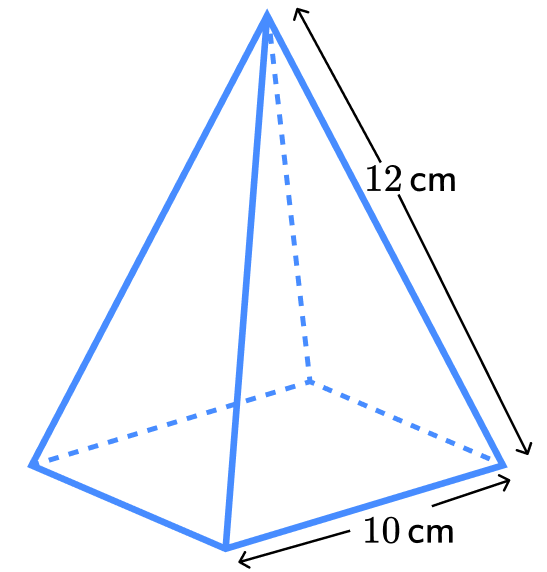 Edited  |
In the square-based pyramid below, if the base sides are $10$ cm and the slant height is $12$ cm, what is the height of the pyramid?
|
In the square-based pyramid below, if the base sides are $3.9$ in and the slant height is $4.7$ in, what is the height of the pyramid?
|
Rationale: Metric units (cm) are present in both the question text fields and the image labels. All metric measurements must be converted to US customary (inches). The base side of 10 cm and slant height of 12 cm must be converted to inches, and the answer recalculated accordingly. Image edit: Only change '12 cm' to '4.7 in' in the slant height label on the right side of the pyramid, keep everything else the same | Only change '10 cm' to '3.9 in' in the base edge label at the bottom of the pyramid, keep everything else the same
|
| sqn_01JBB3CYEDCB2GRR7X0WJACJN8 | Localize | Units (convert) | Original 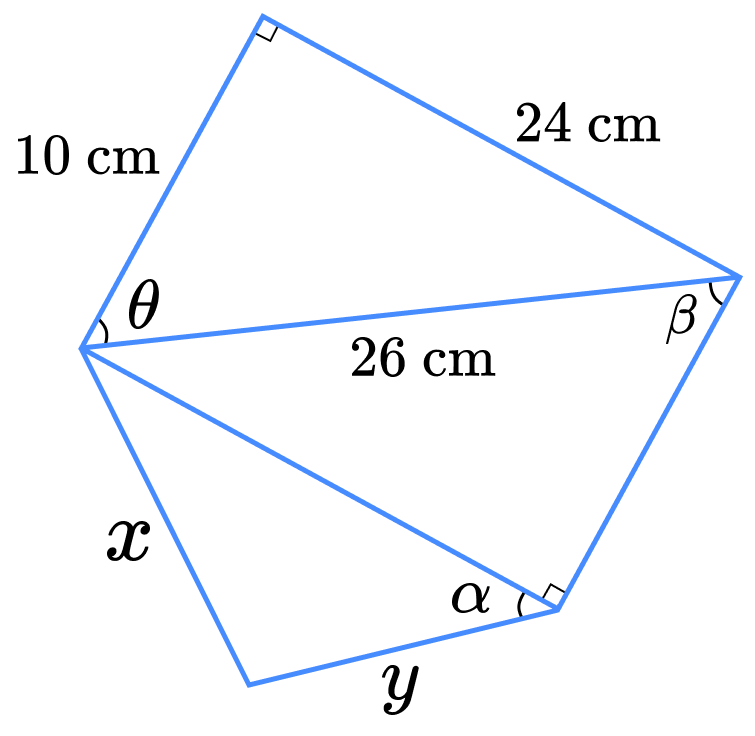 Edited  |
Given the angle $\theta$ in the figure below, what is the measurement of the opposite side?
|
Given the angle $\theta$ in the figure below, what is the measurement of the opposite side?
|
Rationale: The image contains metric unit labels (10 cm, 24 cm, 26 cm) and the suffix field contains "cm". All metric units must be converted to US customary (inches). The question involves a geometric figure with labeled sides in centimetres, requiring conversion to inches. Image edit: Only change '10 cm' to '4 in' in the upper-left side label, keep everything else the same | Only change '24 cm' to '9 in' in the upper-right side label, keep everything else the same | Only change '26 cm' to '10 in' in the diagonal side label, keep everything else the same
|
| sqn_01JBZZM6453Z87DHV525RFHWD8 | Localize | Units (convert) | Original 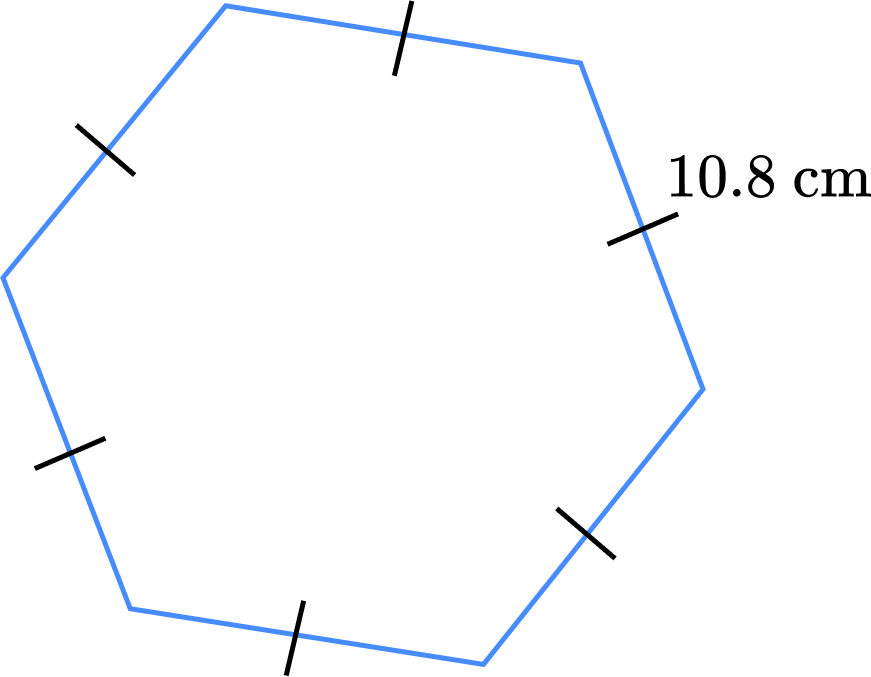 Edited  |
The side of a regular hexagon is $10.8$ cm.
What is its perimeter?
|
The side of a regular hexagon is $4.3$ in.
What is its perimeter?
|
Rationale: The question contains metric units (cm) in the content, suffix, and image label. All metric units must be converted to US customary (inches). The side length 10.8 cm converts to approximately 4.3 in, and the perimeter 64.8 cm converts to approximately 25.5 in. Image edit: Only change '10.8 cm' to '4.3 in' in the side label on the upper right of the hexagon, keep everything else the same
|
| sqn_01JSZRYT63X2YPEE5VA09C3DX2 | Localize | Units (convert) | Original 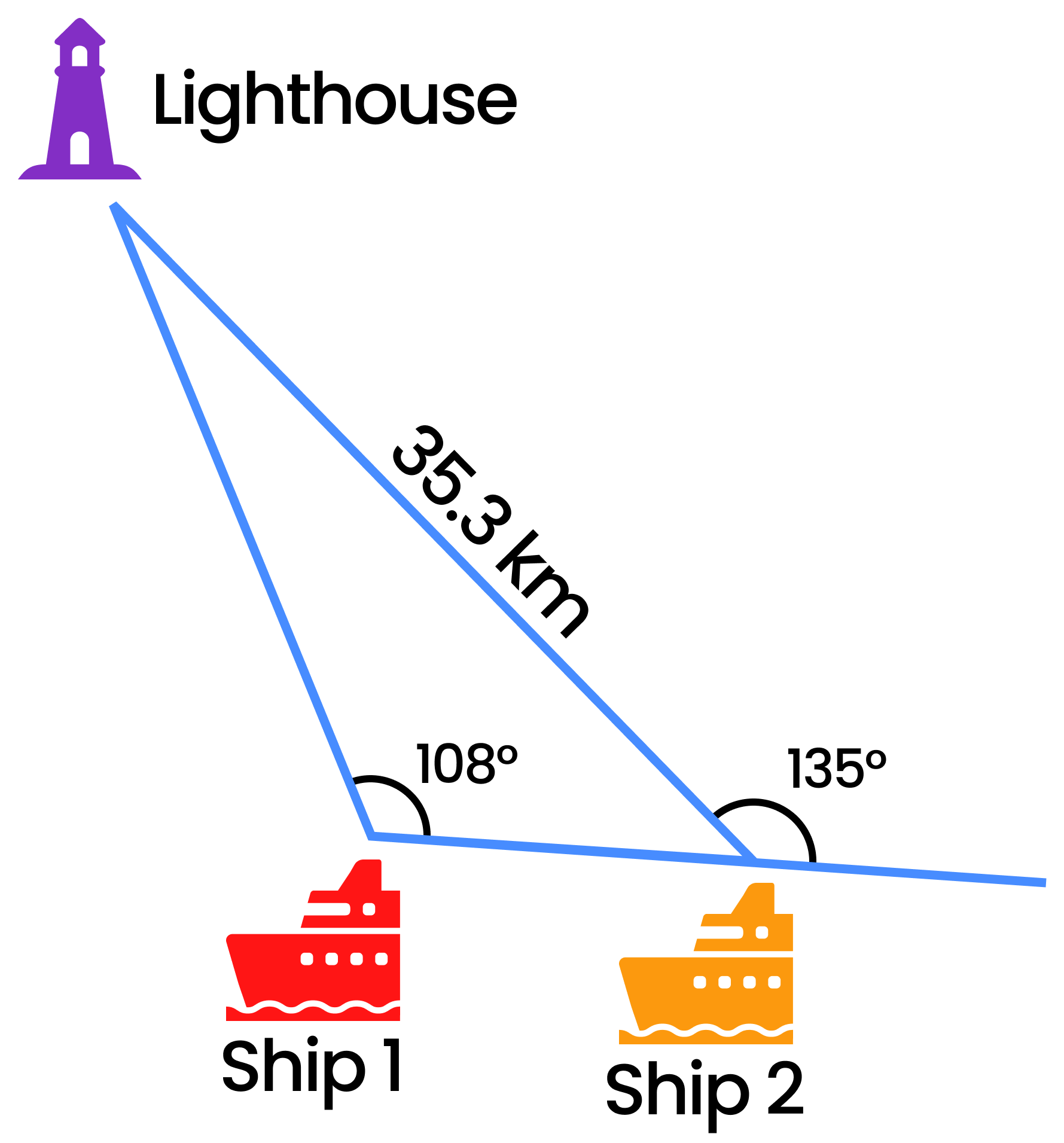 Edited  |
What is the distance between the two ships?
|
What is the distance between the two ships?
|
Rationale: The image contains metric units (km) as a label on the triangle side (35.3 km), and the suffix field contains "km". All metric units must be converted to US customary (miles). The answer value must also be converted accordingly. Image edit: Only change '35.3 km' to '21.93 miles' in the triangle side label, keep everything else the same
|
| sqn_01JW7DRJTA09WEGAZ14J7MQPPZ | Localize | Units (convert) | Original 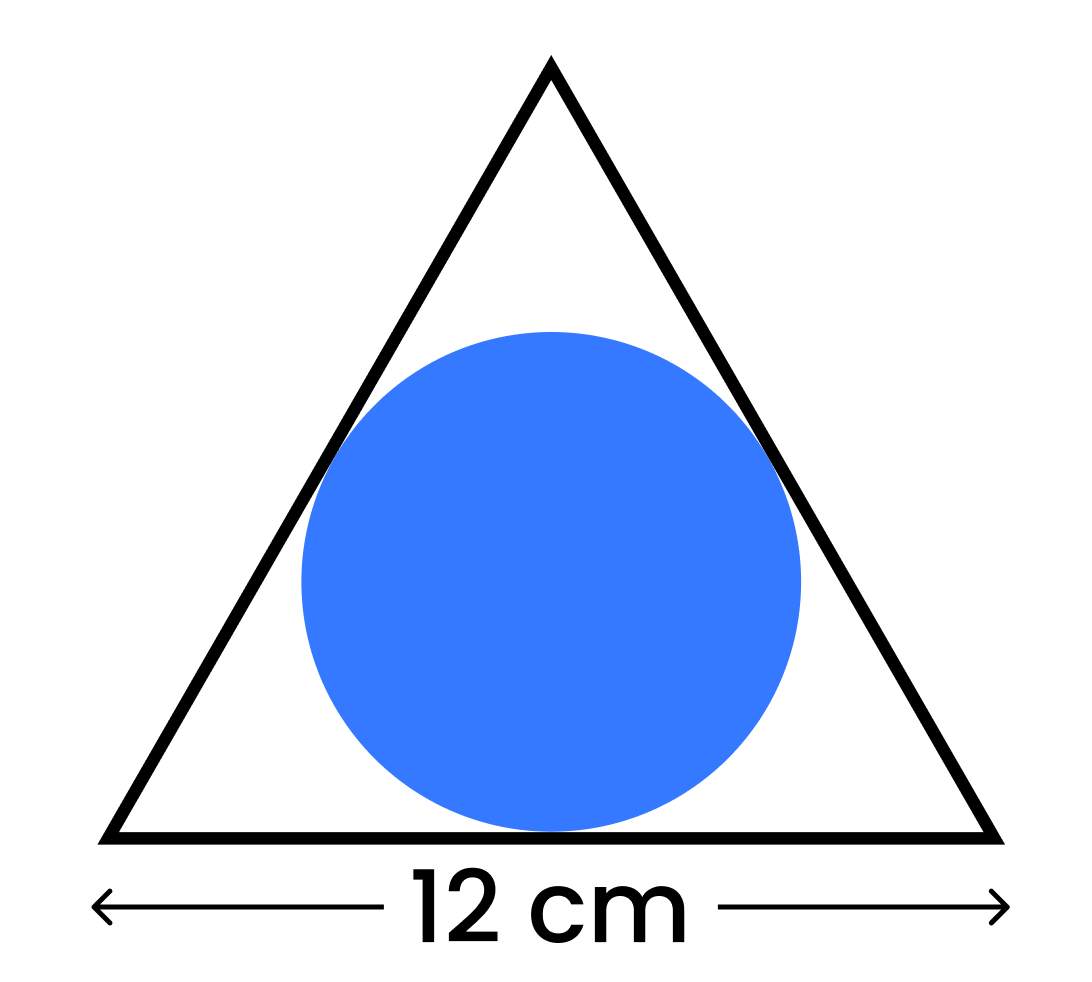 Edited  |
An equilateral triangle with a side length of $12$ cm has a circle inscribed within it.
What is the probability that a randomly chosen point inside the triangle also lies inside the circle?
|
An equilateral triangle with a side length of $4.7$ in has a circle inscribed within it.
What is the probability that a randomly chosen point inside the triangle also lies inside the circle?
|
Rationale: The question contains metric units (cm) in both the question text and the image label. These must be converted to US customary units (inches). The answer is a probability (dimensionless ratio) and does not change with unit conversion, as the inscribed circle radius and triangle area scale proportionally regardless of units. The probability value 0.6 remains correct. Image edit: Only change '12 cm' to '4.7 in' in the base label below the triangle, keep everything else the same
|
| sqn_01K03Y3KBQPGEQ0JTZB0ZJPK5X | Localize | RED.units_complex_converted | Original 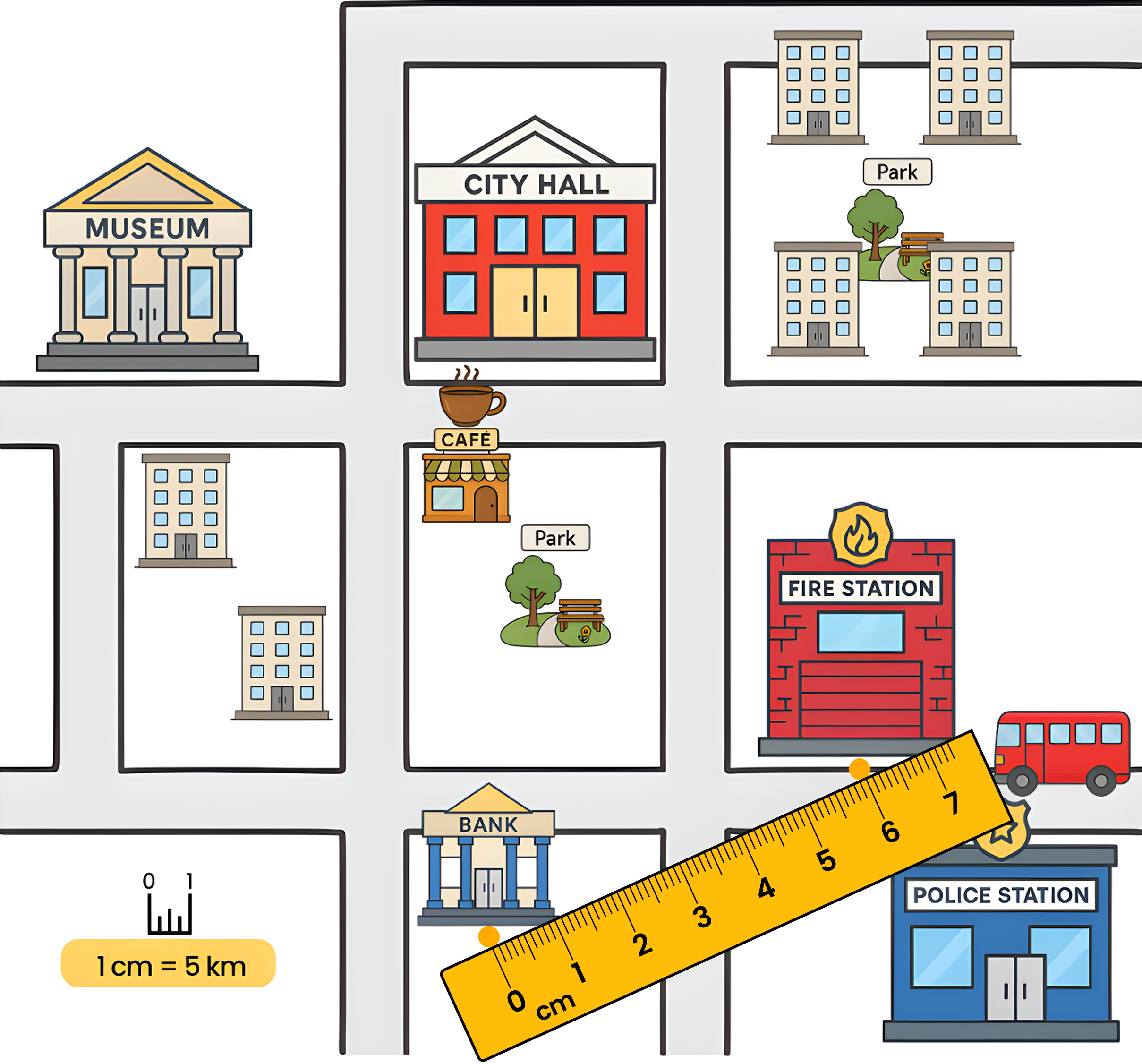 Edited  |
What is the real distance between the bank and the fire station?
|
What is the real distance between the bank and the fire station?
|
Rationale: The image contains a map scale "1 cm = 5 km" and a ruler overlay. The suffix field contains "km" and the answer is derived from a map measurement. Converting the map scale from metric to US customary requires changing both the cm and km components of the scale ratio, which affects the answer derivation. The ruler shows approximately 6 cm between the bank and fire station (0 to ~6 cm), giving 6 × 5 = 30 km. Converting: 1 cm = 5 km → 1 in = 12.43 miles (using 1 cm = 0.394 in, 1 km = 0.621 miles: 5 km = 3.107 miles per cm, per inch = 3.107/0.394 = ~7.89 miles/in). However, for a clean pedagogical map scale, we use 1 in = 8 miles. The ruler measurement in inches: 6 cm ≈ 2.36 in, so distance ≈ 2.36 × 8 = ~19 miles. But since the answer must be a whole number and the scale conversion is complex with interdependent values, this is flagged as RED.units_complex_converted for human review. Using exact conversion: 30 km × 0.621 = 18.63 miles ≈ 19 miles. Image edit: Only change "1 cm = 5 km" to "1 in = 8 miles" in the map scale legend (bottom-left corner), keep everything else the same | Only change the ruler markings unit label "cm" (at the 0 end of the ruler) to "in", keep all numeric tick marks and everything else the same
|
| sqn_01K040XH0W8JKGNWARVRGKTQP7 | Localize | Units (convert) | Original 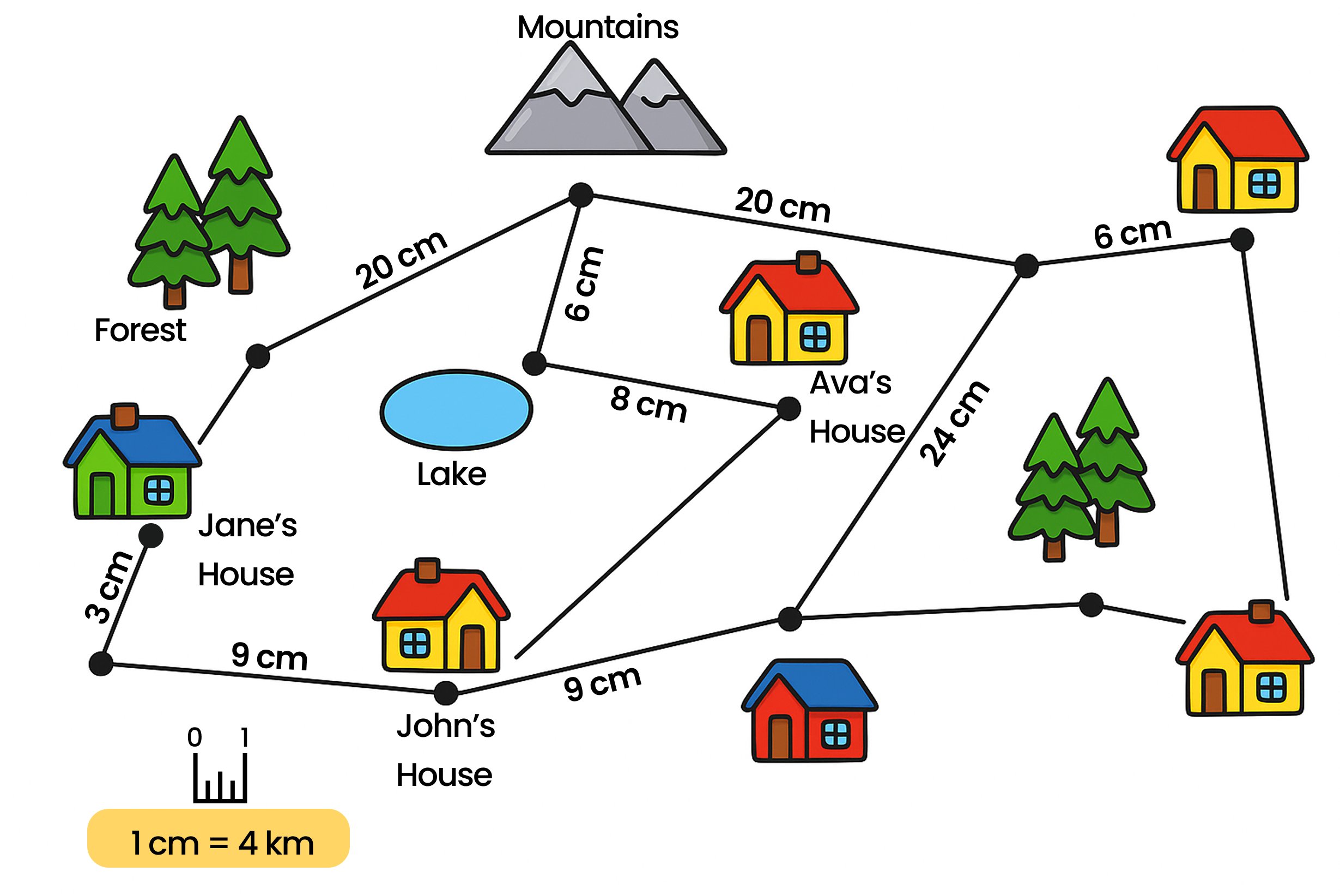 Edited  |
Jane rides a bus along the shortest path to John's house.
How far does she travel?
|
Jane rides a bus along the shortest path to John's house.
How far does she travel?
|
Rationale: The image contains multiple metric unit labels (cm) on map path segments, and the map scale reads "1 cm = 4 km". The suffix field contains "km" and the answer is expressed in km. All metric units must be converted to US customary equivalents. The question involves a map scale problem where the shortest path from Jane's House to John's House must be identified and converted. Image edit: Only change the map scale label "1 cm = 4 km" to "1 in = 16 miles" in the bottom-left yellow label, keep everything else the same | Only change the path label "20 cm" (between Forest junction and the top-center node near Mountains) to "20 in", keep everything else the same | Only change the path label "6 cm" (descending from the Mountains top-center node toward the Lake junction) to "6 in", keep everything else the same | Only change the path label "20 cm" (going right from the Mountains top-center node) to "20 in", keep everything else the same | Only change the path label "8 cm" (from Lake junction toward Ava's House) to "8 in", keep everything else the same | Only change the path label "6 cm" (from right-side junction to top-right house) to "6 in", keep everything else the same | Only change the path label "24 cm" (from right-side junction going down) to "24 in", keep everything else the same | Only change the path label "3 cm" (below Jane's House) to "3 in", keep everything else the same | Only change the path label "9 cm" (from Jane's House going right toward John's House) to "9 in", keep everything else the same | Only change the path label "9 cm" (from John's House going right) to "9 in", keep everything else the same
|
| sqn_01K6042EX6NEESQEX5M8T12EC8 | Localize | Units (convert) | Original 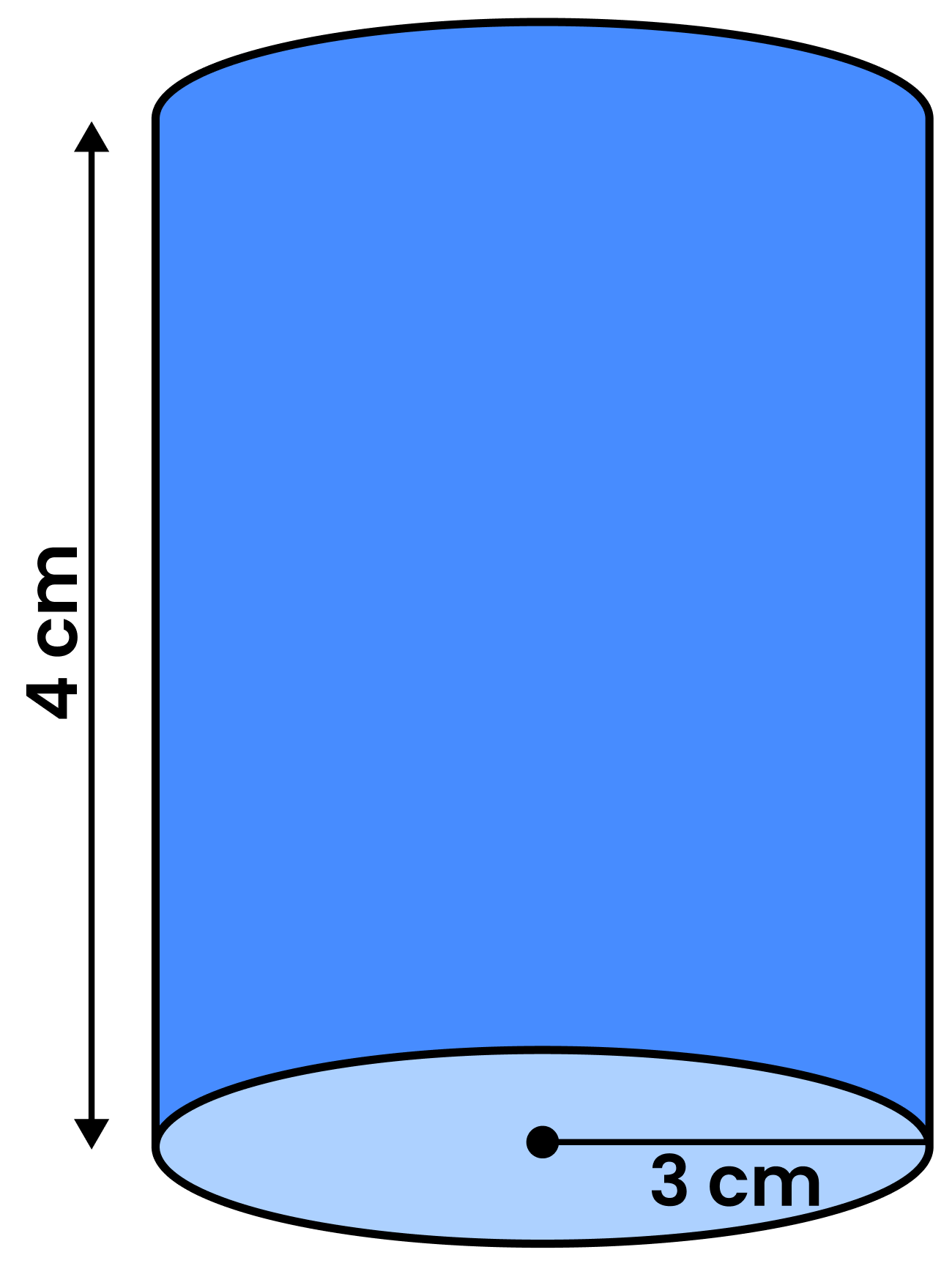 Edited  |
A cylinder has a radius of $3$ cm and a height of $4$ cm.
What is its volume?
|
A cylinder has a radius of $1.2$ in and a height of $1.6$ in.
What is its volume?
|
Rationale: Metric units (cm) are present in both the question text and the image labels. All metric measurements must be converted to US customary (inches). The volume answer must be recalculated accordingly. Image edit: Only change '4 cm' to '1.6 in' on the height label (left side vertical arrow), keep everything else the same | Only change '3 cm' to '1.2 in' on the radius label (bottom of cylinder), keep everything else the same
|
| sqn_07b9be8f-54f0-403d-a184-987f89de08dc | Localize | Units (convert) | Original 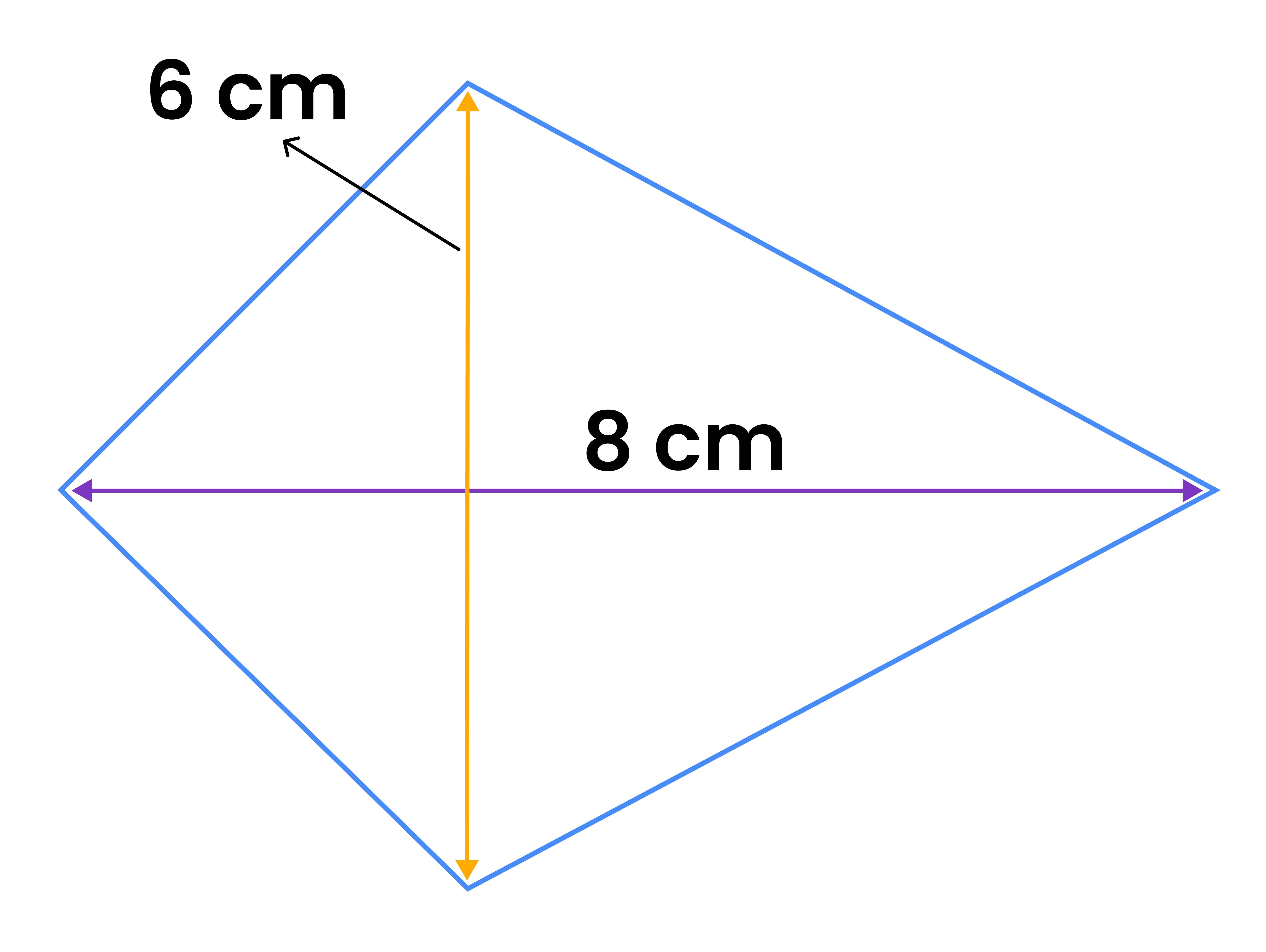 Edited  |
Explain why the area of a kite with diagonals $6$ cm and $8$ cm is $24$ cm$^2$.
|
Explain why the area of a kite with diagonals $2.4$ in and $3.2$ in is $3.84$ in$^2$.
|
Rationale: Metric units (cm) are present in both the question text, the answer text, and the image labels. All metric units must be converted to US customary (inches). The diagonals are 6 cm and 8 cm; converting: 6 cm × 0.394 ≈ 2.4 in and 8 cm × 0.394 ≈ 3.1 in. However, to preserve clean round numbers for pedagogy, 6 cm → approximately 2.5 in and 8 cm → approximately 3 in gives area = 0.5 × 2.5 × 3 = 3.75 in², which is not clean. Using exact conversion: 6 cm ≈ 2.4 in, 8 cm ≈ 3.1 in, area ≈ 3.7 in². For cleaner pedagogy, keeping the numeric values as 6 in and 8 in (treating the original numbers as now representing inches) is not appropriate — we must convert. Best clean approach: 6 cm → 2.4 in, 8 cm → 3.2 in, area = 0.5 × 2.4 × 3.2 = 3.84 in² — still not clean. Using 6 cm → 2½ in and 8 cm → 3 in: area = 0.5 × 2.5 × 3 = 3.75 in² — cleaner. Adopting 2.4 in and 3.2 in for fidelity: area = 3.84 in². Will use the direct conversion values rounded to one decimal place for accuracy. Image edit: Only change '6 cm' (the label in the upper-left area pointing to the kite side/diagonal) to '2.4 in', keep everything else the same | Only change '8 cm' (the label on the horizontal diagonal) to '3.2 in', keep everything else the same
|
| vhDZbEmA2vrbvS0Ji21R | Localize | Units (convert) | Original 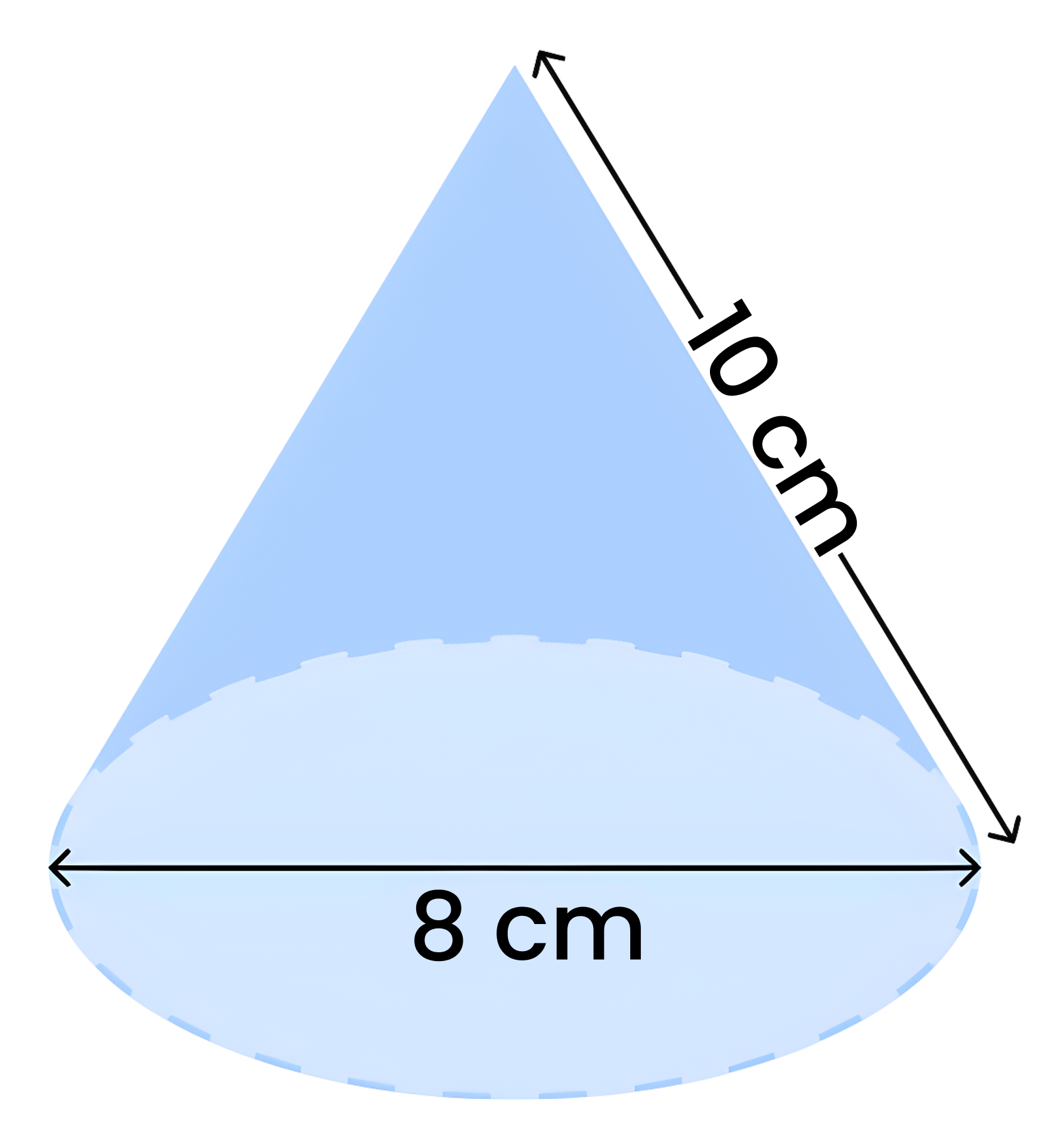 Edited  |
A cone has a slant height of $10$ cm and a base diameter of $8$ cm.
Find the total surface area of the cone.
|
A cone has a slant height of $4$ in and a base diameter of $3.1$ in.
Find the total surface area of the cone.
|
Rationale: Metric units (cm) are present in both the image labels and the text fields. The slant height is given in cm and the base diameter in cm, and the suffix is cm². All metric units must be converted to US customary (inches). This is a straightforward geometry question with no complex formula re-derivation required, so RED.units_simple_conversion applies. Image edit: Only change '10 cm' to '4 in' in the slant height annotation label on the right side of the cone, keep everything else the same | Only change '8 cm' to '3.1 in' in the base diameter annotation label at the bottom of the cone, keep everything else the same
|
| wULkGahpkFp19LryDGTH | Localize | RED.units_complex_converted | Original  Edit requested (no output)
|
Fill in the blank:
|
Fill in the blank:
|
Rationale: The image shows a unit conversion question: 0.0005 m³ = ? mL. Both m³ and mL are metric units present in the image. The skill is "Converting between units of capacity and volume." Converting m³ to fl oz (US customary for mL) requires a multi-step unit conversion: 0.0005 m³ → fluid ounces. 1 m³ = 33,814.02 fl oz, so 0.0005 m³ = 16.907 fl oz ≈ 17 fl oz. However, this is a pedagogically awkward conversion. The original question teaches the relationship between m³ and mL (1 m³ = 1,000,000 mL, so 0.0005 m³ = 500 mL). Converting to US customary destroys the clean integer relationship and the pedagogical intent. Nevertheless, per policy, all metric units must be converted. The conversion involves interdependent unit relationships and re-derivation, so RED.units_complex_converted is appropriate. Image edit: Only change '0.0005' (inside the left blue box) to '0.0005' — keep the numeric value the same but change 'm³' (outside the left blue box) to 'ft³' | Only change 'mL' (outside the right blue box) to 'fl oz'
|
| ytNyFHJw7yGZz0z0FB1T | Skip | No change needed | Original 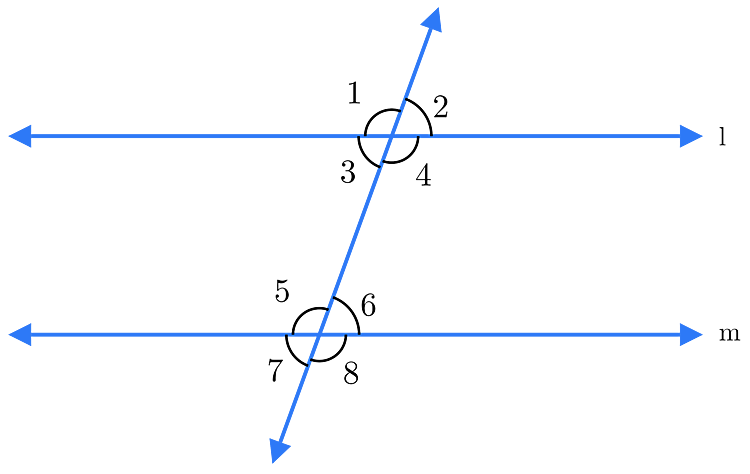 |
Identify the pair of alternate exterior angles.
|
No changes |
Rationale: The question and all answer fields contain no Australian-specific spelling, terminology, or metric units. The image shows two parallel lines (l and m) cut by a transversal with angles labeled 1–8. There are no metric units, AU spelling, AU school terminology, currency, or cultural references anywhere in the text or image. The content is purely geometric/mathematical and is identical in both AU and US educational contexts. |